
How to Arrange Red Roses in a Vase Step by Step
Get simple, step-by-step tips on how to arrange red roses in a vase for a beautiful, balanced display that stays fresh and eye-catching.
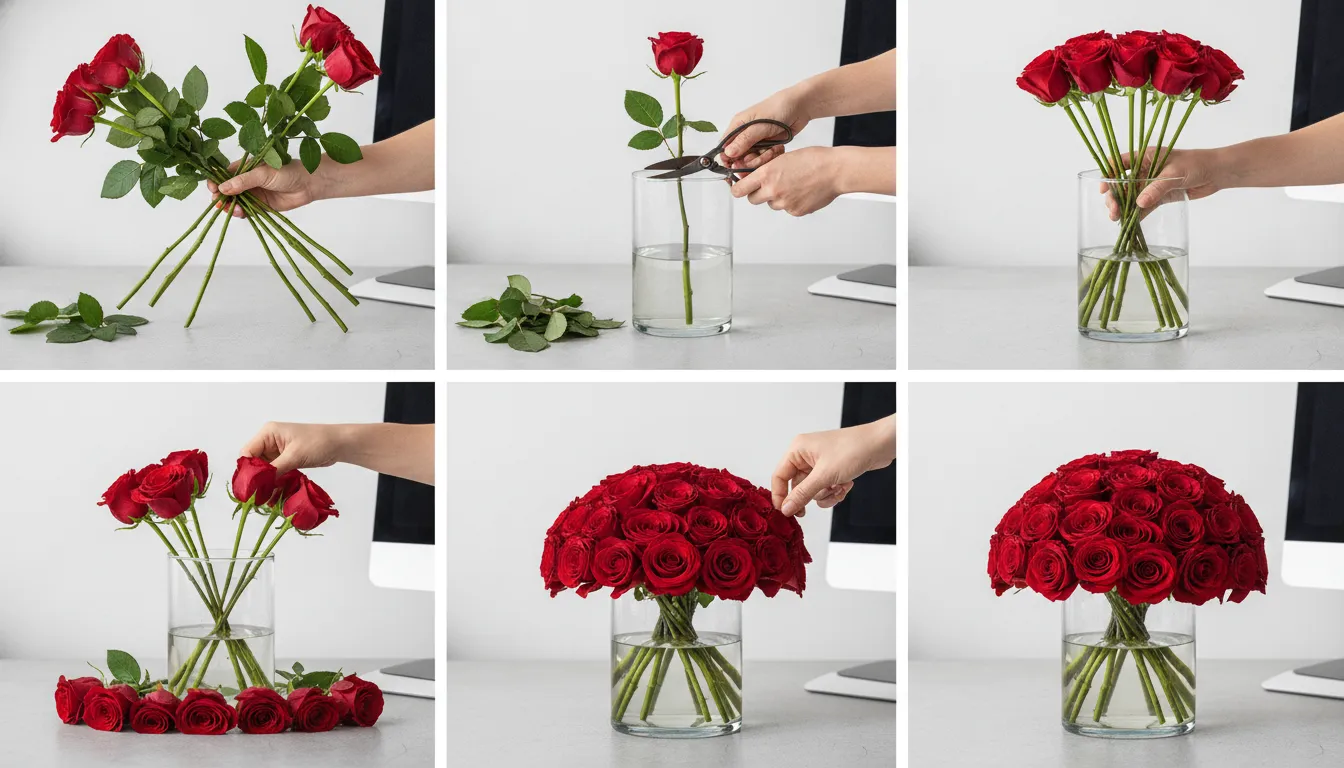
A beautiful rose arrangement doesn’t have to be perfectly symmetrical or packed with extra flowers. Often, a few well-placed stems and a suitable vase are all you need. The key is to prepare the roses carefully, vary their heights, and leave room for the petals to open. If you’ve wondered how to arrange red roses without bruising blooms or ending up with an uneven shape, this guide can help. Follow the simple steps to choose a vase, trim and position the stems, add subtle greenery if you like, and keep the roses hydrated after arranging.
Key Takeaways
- Start with fresh, well-prepared roses: Select firm blooms, clear leaves from below the waterline, and make clean angled cuts before arranging.
- Shape the bouquet to suit its vase and setting: Vary stem heights, leave space for petals to open, and add only a few subtle accents.
- Help roses stay fresh, or save time with a florist: Refresh the water and trim stems regularly, or ask a local florist about same-day delivery in your area.
What Do You Need to Arrange Red Roses?
Before you start arranging, gather your roses, a vase, and a few basic supplies. Having everything ready makes the process easier and helps you handle the flowers gently. Greenery and filler flowers are optional, so you can keep the design simple or add a little texture.
Choose firm-stemmed roses with healthy leaves and unbruised petals
Look for roses with firm stems, fresh-looking leaves, and petals without bruises or brown edges. The outer petals may be darker or slightly marked. These guard petals protect the bloom, so leave them in place if they look healthy or gently remove them if they’re damaged.
A mix of bloom stages gives the arrangement room to change. Tighter buds will open over time, while more open roses create a fuller display right away. For additional pointers, Brian’s Country Greenery shares tips for choosing roses and designing an arrangement.
Gather a clean vase, floral shears, flower food, and fresh water
Choose a clean vase that can hold the stems securely, and rinse away any residue before filling it. You’ll also need sharp floral shears, fresh water, and flower food. Follow the directions on the flower food packet, since adding more than recommended may not help your roses last longer.
Use floral shears to trim the stems cleanly before arranging them. Dull scissors can crush stems, making it harder for the flowers to take up water. For more guidance on preparing flowers and avoiding common mistakes, read Floral Matters’ flower-arranging advice.
Set aside optional greenery or filler flowers
Red roses can stand on their own, but a few extra stems can add shape and texture. Eucalyptus gives the arrangement structure, while baby’s breath or wax flowers add a lighter detail. Set out your accents before you begin, then add them gradually so the roses remain the focus.
You can also use other blooms to create a fuller design. Spray roses, peonies, and hydrangea can add depth alongside red roses, as Petal Jet explains in its guide to flower pairings. Start with just a few accent stems, then step back and see whether the arrangement needs more.
Choose Roses and a Vase for Your Design
Before trimming the stems, choose the shape you want and pick a vase that supports it. The right fit gives the roses room to open and helps the arrangement feel balanced.
Match the vase height and opening to the stem length and number of roses
A vase should support the roses without hiding their blooms or letting the stems flop outward. As a starting point, look for a vase about half as tall as the stems, then adjust to suit your design. Taller stems create more drama, while shorter blooms feel closer and more intimate, as Brian’s Country Greenery suggests.
Consider the opening, too. A narrow neck holds a few stems upright, while a wider mouth gives more roses room to spread. To help stems stay in place in a wide vase, arrange them in a loose crisscross pattern. Set the roses beside the vase before cutting, and trim a little at a time until the blooms sit at your preferred height.
Choose a wide vase for a rounded display or a tall vase for a vertical shape
A wide vase encourages the stems to fan outward, making it a good choice for a full, rounded display. This shape works especially well with several roses, since the blooms can sit close together without pressing against one another. Check that the vase is broad enough to hold the stems securely, but not so wide that the flowers spread too far apart.
A tall, narrow vase supports a more vertical arrangement. The stems stay closer together, drawing the eye upward and taking up less space on a counter or side table. Think about the display location as you choose: a low, rounded arrangement can work well as a dining table centerpiece, while a taller design may suit an entryway. Let the vase guide the silhouette, then adjust stem lengths to keep the roses in proportion.
Use a sturdy, watertight pitcher or jar for a relaxed look
A formal vase isn’t your only option. A sturdy pitcher or glass jar gives roses a casual, gathered appearance, and a wider opening lets stems spread naturally. Before arranging, make sure the container is watertight and heavy enough to stay upright once filled. A rose-arranging tutorial shows how a pitcher or jar can create this relaxed style.
Match the container to the number and length of your roses. A small jar suits a few short stems, while a larger pitcher can hold a fuller bunch. If the opening is wider than the arrangement, cross a few stems inside the vase to create support. Keep the container clean, and fill it with fresh water before adding the flowers.
Choose blooms at different stages so they open naturally
Choose roses at a few stages of opening to give the arrangement shape now and room to change over the next several days. A few open blooms provide an immediate focal point, mid-open roses add fullness, and tighter buds bring a sense of progression. Central Florist’s arranging tips recommend mixing stages for this natural rhythm.
Check each rose as you select it. Open blooms should feel firm, with fresh-looking petals and no bruising. Buds should show color and feel plump, rather than appearing tightly closed and green. Once you begin arranging, place the most open roses where you want the eye to land. Add the tighter buds around them so the bouquet has variety without looking uneven.
How Do You Prepare Red Roses?
A few simple steps before arranging help your roses sit neatly in the vase and stay in good condition. Start with a clean workspace, a washed vase, and sharp floral shears. Then prepare each stem before you begin arranging the blooms.
Unwrap the roses and remove damaged petals and leaves
Remove the wrapping gently, taking care not to bend or squeeze the stems. Inspect each rose and remove petals that are torn, bruised, or wilted. If an outer guard petal looks damaged, you can remove it, too. These outer petals help protect the bloom, but taking off a damaged one can leave the rose looking tidier.
Check the leaves for yellowing or breaks, and remove any that look unhealthy. Keep sound leaves that will sit above the waterline, where they add greenery without crowding the blooms. A considered edit helps each rose stand out, and avoiding overcrowded arrangements is a useful principle when preparing your stems.
Remove foliage that would sit below the waterline
Hold each stem beside the vase to estimate where the waterline will fall. Gently remove any leaves below that point with your fingers. Leave healthy foliage above the water, unless it gets in the way of your design or makes the arrangement feel too full.
Submerged leaves can break down in the water, making it cloudy and less pleasant to look at. Take care as you strip the stems so you don’t scrape or tear them. Removing underwater foliage is a small step that helps keep the vase water cleaner. For more guidance, see these tips for clearing leaves below the waterline.
Recut each stem at an angle with clean shears
Use clean, sharp floral shears to trim the bottom of each stem before placing it in water. Remove about half an inch, or more if the stem end looks dry, and make the cut at an angle. This creates a fresh surface for the stem to take up water and helps keep its end from resting flat against the vase.
Make the cut just before putting the rose in water. Dull scissors can crush the stem, so use shears that make a clean cut. If a stem needs shortening to suit your vase, trim a little at a time and check its height before cutting more. An angled cut is a simple preparation step that helps ready each rose for the arrangement.
Hydrate the roses in fresh water with flower food before arranging
Fill a clean container with fresh water and add flower food according to the packet directions. Place each rose in the water as soon as you’ve trimmed its stem. If you have time, let the roses hydrate while you prepare the vase or plan the arrangement.
Keep them in a cool spot away from direct sunlight, heaters, and ripening fruit. Use the amount of flower food recommended on the packet rather than adding extra. After arranging, refresh the water regularly and recut the stems every few days to help the roses stay fresh, as flower care guidance recommends.
How Do You Arrange Red Roses in a Vase?
Fill the vase with clean water and the recommended amount of flower food
Begin with a clean vase and fresh, room-temperature water. Add flower food according to the packet directions, since the recommended amount is measured to nourish the blooms. Too much flower food can affect the water, so resist the temptation to add extra.
Before arranging, place the vase where you plan to display it. A full vase can be awkward to move, and choosing the spot now helps you picture the bouquet’s shape. Check that the vase sits flat and feels sturdy. If it’s clear, wipe away smudges so the stems and water look neat. Keep the waterline low enough that no leaves will sit underwater. Leaves in the water can break down and make it harder to keep the arrangement fresh.
Add a few roses to establish the arrangement’s height and shape
Start with three or four roses to create the arrangement’s outline. Place one stem near the center, then add the others around it at slightly different heights. Taller roses can give the bouquet a graceful vertical shape, while shorter blooms around the edge help it feel full.
Think about where the vase will sit as you build. A centerpiece should look balanced from several sides; a bouquet displayed against a wall can have a more defined front. Leave a little space between blooms so the petals have room to open. For more ideas on shaping the design, Brian’s Country Greenery recommends balancing taller stems with shorter blooms.
Place the remaining stems in a spiral or crisscross pattern
Add the remaining roses one at a time, angling each stem slightly as you place it. Let the stems cross inside the vase instead of lining them up side by side. This creates a supportive structure and helps the blooms spread into a rounded shape.
Handle the stems gently, and take care not to press petals against the vase or neighboring roses. If a stem looks too long, trim it a little at a time with clean shears. That gives you more control over the arrangement’s height. The crisscross method for arranging roses can help hold stems in place and create a fuller look. Keep adjusting as you go, rather than waiting until every rose is in the vase.
Turn the vase as you work to distribute blooms evenly
After placing a few roses, turn the vase and check the arrangement from another side. This helps you notice gaps or crowded areas while there’s still room to adjust the stems. Add each new rose where it helps balance the shape, rather than clustering the blooms in one spot.
Angle some roses slightly outward for a natural, open look. If the bouquet will be viewed from all sides, keep rotating the vase as you work and distribute the blooms around it. For an arrangement that will sit against a wall, turn the fuller side toward the front. Check the stems in a clear vase, too, since their placement is visible. Small adjustments along the way can help the finished bouquet look considered from every angle.
Check the arrangement from every angle and adjust the stems
When all the roses are in the vase, step back and look at the arrangement from the front, sides, and above. Check that the blooms are spread evenly, the height suits the vase, and no rose is hidden behind another. Gently reposition stems to fill open spaces or give crowded petals more room.
Look below the waterline for leaves, and remove any you find. Check whether a rose sits too low or extends farther than you’d like; trim or reposition its stem as needed. A final review helps the bouquet feel balanced wherever you display it. Floral Matters suggests assessing the arrangement as you build, so you can make small changes before you finish.
How Do You Balance a Red Rose Arrangement?
Vary stem heights while keeping the overall shape intentional
Give the roses a little variation in height so the arrangement feels lively rather than flat. Start with a few taller stems to establish the outline, then add shorter roses around them for fullness. Keep the overall shape in mind as you work: a rounded arrangement should feel balanced from side to side, while a taller design can draw the eye upward. If one bloom looks out of place, trim or reposition its stem until it fits naturally. Varying the heights adds dimension while keeping the roses at the center of attention. For more inspiration, explore these red rose arrangement tips.
Distribute blooms evenly and leave room for petals to open
Turn the vase as you arrange so you can see how the roses look from every side. Shift stems to fill noticeable gaps, but leave a little room between blooms. Roses continue to open after they’re cut, and crowded petals can press against one another as the flowers expand. For a full arrangement with a natural feel, combine a few open roses with blooms that are partly open or still closed. The open roses give the bouquet shape right away, while the others add variety as they bloom. This guide to mixing rose stages offers more ideas for creating a bouquet that changes gracefully over time.
Match the arrangement’s size to the vase and display location
Choose a vase that supports the stems and suits the place where you plan to display the roses. A wide vase works well for a rounded arrangement, while a taller, narrower vase can support a more vertical shape. Make sure the vase feels stable and has enough room for the stems without letting them spread too far apart or crowd together. Consider the setting, too. A table centerpiece should leave room for people to see and talk across the table, while an arrangement for a side table can have more height. A well-proportioned vase and bouquet will look balanced and feel at home in the space.
Place the focal point off-center for a relaxed, natural style
For a relaxed look, place one especially open or striking rose slightly off-center instead of lining it up precisely in the middle. Arrange the surrounding blooms at varied heights, then turn the vase to check that the focal rose feels connected to the rest of the bouquet. This small shift adds a natural sense of movement without making the arrangement look uneven. If you prefer a more formal style, space the roses evenly for a symmetrical effect. Whichever look you choose, check the arrangement from the front and sides, then adjust stems that draw too much attention away from the focal bloom. These basic floral arranging principles can help you refine the overall shape.
Which Greenery and Filler Flowers Pair Well With Red Roses?
Greenery and filler flowers add shape and texture to a red rose arrangement. Choose accents that complement the roses, then use them sparingly so the blooms remain the focal point.
Add eucalyptus for structure and soft contrast
Eucalyptus brings graceful movement and a soft green tone that contrasts with red roses without competing for attention. Its branching stems can add height and shape, while its rounded or narrow leaves give the arrangement a natural finish. Floret Flowers’ foliage guide features eucalyptus as a popular choice for its distinctive form and muted color.
Start with a few stems around the outside of the arrangement or between the roses. Remove leaves that cover the blooms, and keep most of the greenery below the rose heads. For a relaxed look, let one or two sprigs extend slightly beyond the shape of the bouquet.
Use baby’s breath, wax flowers, or Queen Anne’s lace for light texture
Delicate filler flowers can soften the bold look of red roses and add detail without overwhelming the main blooms. Baby’s breath creates a light, cloudlike effect, wax flowers offer small star-shaped blooms, and Queen Anne’s lace brings an airy, garden-inspired feel. Team Flower’s filler flower guide describes how these flowers can add texture while keeping an arrangement light.
Choose one variety for a simple, cohesive design, or combine two in small amounts. White fillers create a crisp contrast with red roses, while pale pink accents lend a softer feel. Trim the filler stems into shorter pieces so you can place them precisely.
Place accents between blooms to fill gaps without crowding
After arranging the roses, look for open spaces between the blooms. Add small pieces of greenery or filler flowers to those gaps instead of creating a thick border around the outside. This helps the arrangement feel balanced while keeping the rose petals visible.
Turn the vase as you work, and tuck each accent between stems, slightly below the rose heads. A rose-arranging demonstration shows how small accents, including wax flowers, can fill spaces between blooms. Step back to check the shape from different angles. If an addition makes the roses feel crowded, remove it or try a different position.
Keep extra colors and greenery subtle so red roses stay the focus
Red roses make a strong statement, so keep the supporting colors simple. Green foliage, white filler flowers, and soft blush accents pair well with red. Bright colors or large greenery stems can draw the eye away from the roses and make the arrangement feel busy.
Before adding another accent, check the arrangement from several sides. The roses should catch your eye first, with greenery and filler adding texture around them. Petal Jet’s rose pairing guide recommends keeping complementary colors and foliage understated. When in doubt, use fewer accents and let the roses set the tone.
Which Red Rose Arranging Mistakes Should You Avoid?
A few simple choices can help your roses look balanced and stay fresh longer. As you arrange them, take your time and check how the flowers look from different angles.
Use a clean vase and remove leaves below the waterline
Wash the vase before you begin, then add fresh water and flower food according to the package directions. A clean vase helps keep the water in good condition. Before placing each rose, remove any leaves that would sit below the waterline. Foliage left underwater can break down and encourage bacteria, which may affect how long the flowers last.
Once the roses are in place, check the waterline again. Leaves can slip beneath the surface as you adjust the stems. If you’re reusing a vase, rinse away any residue before filling it. These small preparation steps give your roses a fresh start, as Blossom Florist’s arranging advice also recommends.
Avoid crowding blooms or crushing petals as you place stems
Give each rose a little space so its petals can open and its shape stays visible. When blooms are pressed tightly together, petals may bruise and the arrangement can look crowded. Add roses one at a time, turning the vase as you work to check for gaps and crowded spots.
Hold each flower by the stem rather than gripping the bloom. If you need to reposition a rose, ease it gently into place instead of forcing it between other stems. A smaller arrangement with room to breathe can look more intentional than one packed with flowers. For more advice on careful handling, read these bouquet-arranging tips.
Don’t cut stems too short or give every bloom the same height
Trim stems a little at a time, checking the overall shape as you go. You can always shorten a stem further, but you can’t add length back once it’s cut. Use clean, sharp floral shears, and leave enough stem for each rose to sit securely in the vase with its end in the water.
Varying the height of the blooms gives the arrangement dimension. Place a few roses slightly higher and others closer to the vase rim, while keeping the overall outline balanced. If you’re unsure where to start, trim the tallest stems first, then adjust the rest to suit. These flower stem-trimming tips offer helpful guidance on getting the proportions right.
Keep decorative accents from competing with the roses
Greenery and filler flowers can add texture, but use them sparingly. Tuck accents between the roses to soften gaps or support the arrangement’s shape. Too much greenery or a mix of strong colors can draw attention away from the red blooms, so step back as you work and make sure the roses remain the main focus.
You can add variety by using roses at different stages of opening. Fully open blooms create a focal point, while partly open roses add shape and tighter buds bring a sense of change as they open. Keep the accents subtle and let the flowers set the tone. These red rose design ideas show how varied blooms can add interest while keeping the roses at the center.
How Do You Keep Red Roses Fresh?
Red roses need clean water, fresh stem cuts, and a cool place to look their best for longer. Check the arrangement every day or two, and make small adjustments as the blooms open and fade.
Change the water and clean the vase regularly
Replace the water every couple of days, or sooner if it becomes cloudy. Empty the vase, rinse away residue, and refill it with fresh water. Add flower food according to the packet instructions, since the right amount helps nourish the roses while keeping the water in good condition.
Before placing the bouquet back in the vase, remove any leaves that sit below the waterline. Submerged leaves can decay and contribute to cloudy water. A clean vase and fresh water help keep the stems hydrated. For additional advice on flower care, explore these floral design tips.
Recut stems and refresh the flower food every few days
When you change the water, lift the roses out and trim a small amount from the bottom of each stem with clean floral shears. Cut at an angle to create a fresh surface for water absorption. Return the stems to the vase promptly, and avoid crushing them as you cut.
Refill the vase with clean water and add flower food as directed. If you run out, use fresh water rather than guessing at a homemade mixture. Regularly refreshing the stem ends helps the roses take up water. These rose arranging tips also recommend recutting stems as part of ongoing care.
Keep the arrangement away from heat, direct sunlight, and ripening fruit
Place the vase somewhere cool, away from sunny windows, heating vents, fireplaces, and appliances that give off heat. Warm conditions can cause roses to lose moisture faster, while direct sunlight can shorten the time they look fresh. A bright room works well if the arrangement sits out of direct sun.
Keep roses away from ripening fruit, too. As fruit ripens, it releases ethylene gas, which can cause flowers to age sooner. A dining table or entryway can be a lovely spot if it stays cool and away from direct sunlight. For more placement guidance, read these flower arranging suggestions.
Remove wilted blooms and fallen petals as needed
Check the arrangement every day or two, and remove wilted blooms, fallen petals, and leaves that have dropped into the water. This keeps the bouquet tidy and helps prevent decaying plant material from affecting the water. Use clean shears to remove a fading rose at the base of its stem, taking care not to disturb nearby blooms.
If a rose looks droopy but its stem is still firm, check the water level and trim the stem before removing it. As individual flowers fade, you can also adjust the remaining stems to keep the arrangement balanced. These flower care suggestions explain why clearing wilted flowers and fallen leaves helps an arrangement look fresh.
When Should You Choose a Florist to Arrange Your Roses?
Choose a professionally arranged bouquet when you need a ready-to-display gift
Choose a professionally arranged bouquet when you want your roses to arrive looking polished and ready to enjoy. A florist selects and prepares the stems, shapes the arrangement, and packages it for delivery. Depending on the bouquet style, the recipient may only need to place it in a vase and add water.
This is a convenient choice for birthdays, anniversaries, thank-you gifts, or a thoughtful surprise. It can also help when you’re sending flowers to someone whose vase or arranging supplies you haven’t seen. Flower shoppers increasingly appreciate convenient delivery options, as Latana’s research on flower-buying habits notes. When placing an order, tell the florist the occasion and any style preferences, such as a classic shape or a more natural look. They can recommend an arrangement that feels personal and suits the recipient.
Ask your local florist about fresh red roses and same-day delivery options
If you need roses soon, contact a local florist to ask what’s fresh and whether same-day delivery is available. Availability can depend on your delivery address, the time you place your order, and current stock, so confirm the details before ordering. You can also ask about bouquet size, rose color, and possible substitutions.
A local florist serving Salt Lake City, Portland, or the Seattle-Tacoma area can help you choose an arrangement and clarify delivery timing. If you have a particular shade or style in mind, share that when you call or order online. Petals London recommends checking with a florist about fresh red roses and same-day delivery. A quick conversation can help you find an option that suits both the occasion and your schedule.
Frequently Asked Questions
How many red roses should I use in an arrangement? The right number depends on your vase and the look you want. A few roses suit a small jar or simple display, while a larger vase can hold a fuller bouquet. Add stems gradually and stop when the flowers look balanced, not crowded.
How long can cut red roses last in a vase? With regular care, cut roses often last about a week, though freshness and room conditions can affect their lifespan. Replace cloudy water, keep the vase away from heat and direct sun, and remove blooms as they fade.
Can I arrange roses without flower food? Yes. Use a clean vase and fresh water, and change the water regularly. If flower food is available, follow the packet directions rather than adding extra.
Why are my roses drooping after I put them in a vase? Check that the stems reach the water and that the vase water is fresh. Recut the stem ends with clean shears, then place the roses back in water promptly. Keep the arrangement in a cool spot while it rehydrates.
Can I order red roses for same-day delivery in Salt Lake City, Portland, or Seattle-Tacoma? Same-day delivery may be available depending on your address, order time, and rose selection. Check with a local florist to confirm delivery options and what’s currently in stock.

