
Wedding Bouquet Styles: Finding the Right Flowers for Your Bridal Look
Compare wedding bouquet styles, from round and hand-tied to cascading shapes, and learn how to match flowers to your dress, setting, and plans.
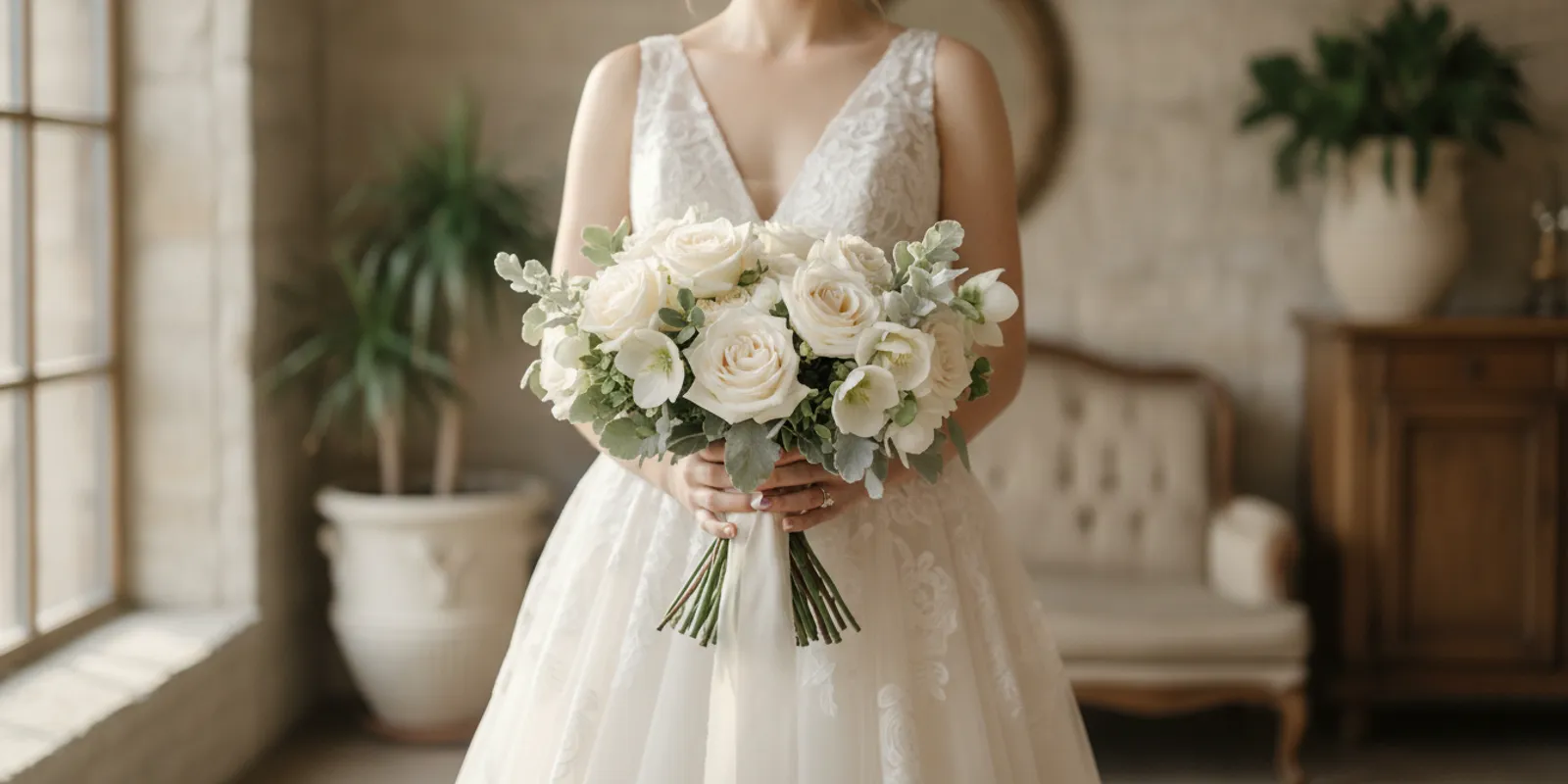
Choosing among wedding bouquet styles is easier when you begin with the shape, scale, and feeling you want—not just a list of flower names. A bouquet should feel like part of your bridal look, work comfortably in your hands, and make sense in the setting where you will carry it. Here is how to compare the most familiar shapes and turn your preferences into a clear plan.
Call to discuss wedding flowers
What should a wedding bouquet do?
A bridal bouquet is both a floral design and something you will carry. It appears in portraits, moves with you through the ceremony, and may be held for a long stretch of time. Its shape can frame your dress, draw the eye toward your face, or add a strong line to a simple silhouette. It can also set a visual direction for the other flowers in the celebration.
Start by deciding what matters most to you. Perhaps you want a romantic, full arrangement. You may prefer a neat cluster that feels light and easy to hold. Or you might want a dramatic outline that is immediately noticeable in photographs. There is no single correct answer. The best choice reflects your taste and the way you expect to use the flowers.
It helps to separate three ideas:
- Shape: The outline of the bouquet, such as round, loose, or cascading.
- Scale: How large it looks next to you and your clothing.
- Style: The mood created by the flower types, colors, textures, and finish.
These choices work together, but they are not interchangeable. Two bouquets can use similar flowers and still feel very different if one is tightly rounded and the other has an airy, asymmetric line. If you are unsure which direction suits you, choose the shape first. It is often the easiest detail to describe and compare.
Which classic bouquet shapes can you choose?
Several familiar forms provide a useful starting point. Names can vary from one florist to another, and a design may blend features from more than one shape. Use these descriptions to explain the effect you like rather than treating them as rigid formulas.
- Round: A compact, balanced silhouette with flowers arranged in a rounded outline. It can feel traditional and polished, especially when the flower heads are grouped closely. A round bouquet is easy to understand visually and can suit many dress shapes.
- Hand-tied: Stems are gathered and bound so the flowers keep a natural, visible-stem appearance. The shape may be round, loose, or slightly uneven. This is a broad style rather than one exact outline, so reference photos help clarify whether you mean tidy and compact or relaxed and garden-like.
- Cascading: Flowers and foliage extend downward from the main body, creating a trailing line. The effect can be soft and flowing or more pronounced. A cascade gives the bouquet a strong presence, so consider how its length will sit against the dress and how you will hold it.
- Posy or petite round: A smaller, gathered arrangement that keeps the focus on a close cluster of blooms. It can feel graceful and restrained. Its scale may be especially appealing if you want the dress to remain the main feature or would rather carry something light.
- Crescent: The flowers form a curved outline, often with the fullest area near the center and tapered sides. This shape can feel sculptural without the long downward trail of a cascade. Its open curve can also leave more of the dress visible.
- Loose, garden-style: An organic arrangement with varied heights, movement, and visible texture. It can be rounded overall but less symmetrical than a classic compact bouquet. The impression comes from the balance of blooms and foliage, not from an unstructured pile of stems.
There are also more specialized forms, such as a presentation bouquet carried along the forearm or a compact cluster designed for one hand. These can be beautiful choices, but comfort and the ceremony plan matter. If you are drawn to a less common shape, ask to talk through its size and how you will carry it before settling on the final direction.
How do you match bouquet shape to your dress?
Think about the whole outline of your outfit. A bouquet sits in front of the body, so its width, length, and visual weight affect what remains visible. You do not need to follow strict rules based on dress type. Instead, use the clothing as a guide to proportion.
A full skirt can visually support a bouquet with more width or volume, while a narrow silhouette may be complemented by a more compact shape or a flowing line. A simple dress can make a textured bouquet stand out. A dress with prominent details may feel better balanced with a cleaner arrangement. These are possibilities, not prescriptions: the look you love should lead the decision.
Neckline and waist details also matter in photographs. If you want the bodice to remain visible, note where the bouquet will naturally rest when you hold it. A wide arrangement can cover more of the front of a dress. A narrow or curved profile may reveal more fabric. If you have a train, consider how a long cascade will relate to its direction and detail rather than letting the two lines compete.
Bring a full-length photo of your dress, or a similar image if the dress is not ready. If possible, include the shoes and veil you expect to wear. A photo taken straight on is useful for scale, while a side view helps show the dress profile. You can also describe the fabric, ornamentation, and any feature you especially want to show.
When comparing inspiration pictures, look beyond the model's height and body shape. Note the bouquet's width in relation to the shoulders, its depth in relation to the waist, and whether it hides a key dress detail. These observations help you describe proportion without needing technical terms.
How large should your bridal bouquet be?
There is no universal measurement that works for every person or outfit. The same arrangement may look generous in one setting and too large in another. A useful test is whether the bouquet feels intentional beside your frame, does not obscure the clothing details you want to show, and can be carried without strain.
Consider scale from three viewpoints:
- Standing in person: Does the bouquet feel comfortable at waist height? Can you hold it with a relaxed grip instead of lifting your shoulders or clutching tightly?
- In a full-length photograph: Does its outline balance your dress, or does it take attention away from the overall look?
- In a close portrait: Are the flower faces and colors visible, and does the arrangement frame you without covering too much of your front?
Your height is only one part of this decision. The volume of the dress, the bouquet shape, and how you plan to hold it can matter just as much. A smaller bouquet can look striking when its details are intentional. A generous bouquet can feel harmonious when it has enough space around it and works with the dress rather than competing with it.
Think about how long you will carry it and whether there are moments when you will need both hands. A compact option may suit someone who wants to move easily, hold a partner's hand, or manage a ceremony program. A larger design may be right if its visual impact is a priority and the ceremony plan allows you to set it down when needed.
Do not choose a size based only on a close-up image. Perspective can make an arrangement appear larger or smaller than it is. Ask for a description of the full silhouette and share a standing photo of the outfit so you can discuss proportion in context.
What flower colors work with your wedding palette?
Begin with the colors that will be closest to the bouquet: your dress, any visible accessories, and the nearby ceremony setting. Then look at the wider palette, including attendants' clothing, table details, and the room or outdoor backdrop. The bouquet can match those colors, echo one accent, or add a thoughtful contrast.
White and soft neutral flowers can create a quiet, classic effect, but they are not automatically the right choice for every outfit or setting. Richer colors can add definition in photographs and bring warmth to a muted palette. A limited mix of shades may feel composed, while a wider range can feel lively and expressive. The important question is whether the combination looks deliberate beside the other visual elements.
Ask yourself:
- Do I want the flowers to blend gently with the dress or stand apart from it?
- Which one or two colors are most important to carry through the wedding?
- Will the ceremony background be light, dark, colorful, or mostly green?
- Are there colors in the outfit that need to stay visible near the bouquet?
- Do I prefer a calm, tonal look or a clear pop of contrast?
Color can change in different light. A shade that seems soft indoors may read more vivid outdoors, and photography can emphasize contrasts. Share the kind of lighting and setting you expect, while keeping the final plan flexible enough to allow seasonal choices. A useful approach is to identify a color family and mood rather than insisting on an exact shade for every bloom.
If you are building a larger floral palette, select a few anchor colors and decide which elements should repeat them. The bouquet can provide a reference point for boutonnieres, attendants' flowers, or ceremony arrangements, if those are part of your plans. You do not need every floral piece to be identical. Repeating one color or texture can create a connection without making each arrangement look like a copy.
How can flowers and textures change the mood?
Shape gives a bouquet its outline, but flower form and texture give it character. Large, rounded blooms often read as soft and full. Smaller flowers can add delicacy or a fine-grained texture. Spiky or architectural forms create definition. Foliage can soften the edge, add movement, or make the flower colors feel more grounded.
Rather than choosing every stem one by one, describe the effect you want. For example, you might ask for a romantic bouquet with a rounded outline and gentle movement, or a modern design with a clean shape and a few strong focal blooms. This gives a designer room to consider the ingredients available while keeping the overall feeling clear.
Texture is especially helpful when your color palette is restrained. A mix of smooth, ruffled, delicate, and leafy elements can make a bouquet feel layered without adding more colors. Conversely, a bouquet with a few flower types and a simple finish can look purposeful when you want a clean, composed effect.
It can help to name what you like in a reference image. Is it the large flower faces, the airy gaps, the trailing foliage, or the contrast between blooms? A photo may contain many details that are not all necessary to your idea. Identifying the one or two features you want to preserve makes your request clearer and gives you room to adapt.
Williams Flower & Gift is a third-generation family florist with more than 40 years of floral experience and direct sourcing relationships with domestic and international farms. Flower selection can depend on the season and availability, so share your preferred mood, colors, and shapes as well as any must-have flowers. That way, the conversation can focus on the look you want, not only on a particular stem name.
Should your bouquet be traditional, modern, or garden-inspired?
These labels are useful shorthand, but they do not have fixed definitions. A traditional bouquet might be compact and balanced, with a familiar rounded profile. A modern arrangement may have a sharper outline, fewer visual elements, or a more deliberate contrast. A garden-inspired bouquet often suggests movement and a mix of forms. Any of these can be adapted to feel understated or expressive.
Look at the rest of your wedding choices. Is the overall feeling formal, relaxed, minimal, vintage-inspired, or celebratory? A bouquet does not have to repeat every detail of the venue or clothing. It should, however, feel as if it belongs in the same visual story.
Try describing the mood in three short phrases. For example: “soft, relaxed, and colorful,” or “classic, compact, and elegant.” Then choose a shape that supports those words. A neat round form may reinforce a polished look. An airy hand-tied bouquet may make a relaxed outfit feel more natural. A crescent or cascade may add a defined sculptural line.
Keep a small inspiration collection rather than bringing dozens of unrelated pictures. A few examples with a consistent feeling are more helpful than a large folder that includes every style you have considered. If you do like several different looks, say which part of each one appeals to you. You might like the color from one, the shape from another, and the texture from a third. These details can be combined in a considered design.
Also decide what you do not want. Words such as “not too large,” “no trailing greenery,” or “avoid a tightly packed look” can be as useful as a list of favorites. Clear limits help keep a design aligned with your preferences without requiring you to know every floral term.
How should the venue and season influence your choice?
The setting affects how the bouquet reads. A broad, open outdoor view can make a tiny arrangement feel understated, while a small indoor room can make a very large bouquet feel dominant. A ceremony with a clean background gives the flowers a clear outline. A busy or colorful space may call for a simpler palette or shape so the bouquet remains easy to see.
Consider the practical conditions, too. If you expect to walk across grass, stairs, or an uneven path, choose a bouquet that you can hold securely and comfortably. If the day includes a long portrait session, ask how to carry it without bending the stems or pressing delicate blooms against clothing. A design should suit the experience as well as the photograph.
Season can influence flower availability and the overall feeling of a design. If you have a specific flower in mind, raise it early and ask what options fit the date. Keep a second choice or a broader description ready, especially if your desired look depends on flowers that may not be available in the form or quantity you expect. A flexible plan can preserve the color, shape, or mood even when exact ingredients need to change.
Outdoor light can make colors look different from indoor light, and a bouquet may appear more vivid against foliage or a pale wall. If you can, view your palette in lighting similar to the ceremony. For an indoor event, think about the room's dominant colors and the distance from the ceremony area to the portrait location. These small details help you decide whether the bouquet should blend in or stand out.
Weather and travel can affect how flowers are handled. Ask about the best way to keep the bouquet protected between pickup or delivery and the ceremony, based on your specific arrangements. Avoid leaving it in direct sun or a hot vehicle for an extended time. Have a designated person know where it should be kept and when it needs to be brought to you.
How do you choose a bouquet you can carry comfortably?
Comfort is easy to overlook when you are focused on photographs. The handle should feel secure, and the arrangement should not require you to hold your arm in an awkward position. Think about how you naturally stand and whether you will carry the bouquet in one hand or both. A quick practice with a similar-sized object can show whether you prefer something petite or more substantial.
For many poses, the bouquet is held near the waist with the flowers angled slightly outward. Holding it too high can cover the bodice, while holding it too low may make your arms look tense. The right position depends on your outfit and what feels natural. If your ceremony includes a reading, vows, or a moment when you need free hands, plan who will hold the flowers for that part.
Check the grip and weight with the people who will carry flowers alongside you, too. A bouquet for an attendant may need a different scale from yours, particularly if the person is younger or will be carrying other items. Coordinated designs can share colors or flower choices without requiring every bouquet to have exactly the same size and shape.
Ask about the stem finish and how the handle will feel in your hand. A tidy wrap can make a gathered bouquet more comfortable to hold, and a suitable length makes it easier to keep the flowers angled as intended. If you have sensitivity to a plant or flower, mention that before making a selection. A florist can discuss whether another option is appropriate.
Finally, consider the transition after the ceremony. Will someone take the bouquet while you greet guests? Do you want it nearby for portraits? If you plan to preserve or dry it, ask what handling steps matter for the flowers you select. If you have no preservation plan, you can focus simply on carrying it comfortably and enjoying it during the celebration.
How can your bouquet connect with the rest of the wedding flowers?
Your bouquet can set a reference point for the rest of the floral plan, but the other arrangements do not need to duplicate it. A shared color, flower type, or texture can make the pieces feel related. The bouquet may be more detailed than the ceremony flowers, or it may be simpler and let the surroundings carry more visual weight.
If you are planning flowers for attendants, consider how their arrangements will look beside yours in group photographs. Similar colors with different sizes can establish a clear distinction. Alternatively, a common shape across the group can look cohesive even when the flower mix varies. Choose the relationship that feels right for the people and the look you want.
For boutonnieres or other small pieces, a single repeated bloom or color can connect them to the main bouquet without trying to reproduce its entire design. Larger ceremony or reception pieces can echo the bouquet's palette while responding to the scale of the room. The goal is a visual thread, not identical arrangements at every point.
Make a short list of the flowers and colors already decided, and mark which choices are essential. Then note what remains flexible. This simple distinction helps a florist understand where to preserve a particular detail and where there is room to adjust. If your plans include several locations or different arrangements, explain where each piece will be used so the scale and style make sense in context.
Williams Flower & Gift offers custom design, wedding consultations, and event florals. To learn more about the family business and its background, visit the about page. For a broader look at available floral designs, explore the bouquet selection. Product examples can help you identify colors and shapes you like, even when you are planning a custom bridal design.
What should you prepare before speaking with a florist?
You do not need to arrive with every detail settled. A few clear references and practical facts can make the conversation more productive. Gather the information that will affect shape, scale, color, and timing, then explain what remains undecided.
- Wedding date and location: These help frame the setting and seasonal discussion. Confirm the service area and delivery or pickup details before relying on a particular plan.
- Dress and accessories: Share a photo or describe the silhouette, fabric, neckline, train, and any details you want to keep visible.
- Palette and mood: Name the colors you want to include and the feeling you want the bouquet to create.
- Shape references: Bring a few images of bouquets you like. Point out the exact feature that caught your eye in each image.
- Size preference: Say whether you picture something petite, medium, or visually generous, and note any concerns about weight or comfort.
- Other floral pieces: List the arrangements you may need, such as attendant flowers, boutonnieres, or ceremony flowers, without assuming they all need to match.
- Must-haves and flexibility: Identify favorite flowers or details, then say which parts could change if availability or season requires it.
Bring a preliminary budget if you have one, and ask what it can cover before finalizing the design. Wedding and event floral pricing is typically quoted in the $2,000–$5,000 range, depending on the event and its needs. That range is not a quote for a specific bouquet or wedding. The best next step is to discuss the scale and pieces you are considering, then request details based on your plans.
Keep your questions in one place. You might ask which design elements have the largest effect on the overall look, what can be adjusted to fit your priorities, and what timing should be confirmed for your date. If a detail is especially important, say so directly rather than expecting it to be inferred from an inspiration image.
How do you compare inspiration photos without getting overwhelmed?
Wedding images can make it tempting to collect every style you see. A more useful method is to sort examples by the details you are trying to decide. Create small groups for shape, palette, texture, and overall mood. This helps you see where your preferences are consistent and where they are still open.
When you save a photo, add a note in your own words: “I like the flowing outline,” “I want these colors,” or “I like that this is small enough to show the dress.” This prevents the picture from being treated as a request to reproduce every detail. You can like the visual effect without needing the same varieties, exact proportions, or setting.
Choose one reference image that best captures the bouquet you imagine, plus a few supporting examples. If the lead image is a cascade, but you are uncertain about its size, add a picture of a smaller arrangement with the scale you prefer. If you love the colors in one image and the shape in another, explain that distinction. Specific notes help turn a mood board into a practical conversation.
Be cautious about comparing photos taken from different angles. A bouquet can look compact from the front and much deeper from the side. A close crop may hide its handle or make the flowers look larger. If scale matters, seek an image that shows the bouquet against a person or dress, and pair it with your own outfit photo.
It is also fine to change your mind. Use the first conversation to identify which features matter most. Once you understand the options and practical considerations, you may find that a different shape fits your plans better. Keep the main priorities visible so a new idea does not accidentally replace the reason you chose the original direction.
What common bouquet-planning mistakes can you avoid?
A little planning can prevent a beautiful idea from becoming uncomfortable or difficult to coordinate. Most problems come from making decisions in isolation: choosing by flower name alone, ignoring the outfit or venue, or assuming that an inspiration image communicates every preference.
- Choosing only by flower variety: A favorite bloom can appear in many different styles. Decide the shape and mood as well as the flower names.
- Ignoring proportion: A bouquet should be considered next to the dress and the person carrying it, not only as a standalone product photo.
- Assuming exact seasonal availability: Discuss alternatives that preserve the color or effect you want if a specific flower is unavailable.
- Using too many unrelated references: A large, inconsistent collection can make it hard to identify the actual preference. Select a small set and explain what you like in each.
- Forgetting comfort: Consider weight, grip, and how long you will carry the bouquet, not just how it looks in a posed picture.
- Planning each floral piece separately: Decide how the bouquet relates to the rest of the wedding flowers, even if the pieces are not identical.
- Leaving practical details unclear: Confirm the date, location, delivery or pickup plan, and timing directly instead of assuming that a general service statement answers those questions.
Another common misstep is expecting a reference photograph to work as a complete specification. It may show the result of a particular season, setting, or arrangement scale. Use it to communicate what appeals to you, then ask how to bring that effect into your own plans. The final design should be guided by the details you value most and the practical conditions of your wedding.
How can you make the final decision?
When two or three styles appeal to you, compare them against the same priorities. Ask which one works best with your dress, which feels comfortable to carry, and which creates the mood you want in the ceremony setting. If one choice wins on appearance but another feels far easier to manage, decide whether you can adjust the shape or scale to keep the strengths of both.
One helpful exercise is to rank your preferences: most important, nice to have, and flexible. “Show the neckline” might be most important. “Use a particular flower” might be nice to have. “Include a trailing detail” might be flexible. Your order may be different, but naming it prevents small details from overshadowing your main goal.
Then describe the bouquet in a short sentence. For example: “I want a medium, softly rounded bouquet with movement, warm colors, and enough space to show the front of my dress.” This is more useful than a string of flower names alone because it communicates the outline, scale, mood, and practical purpose. You can then discuss specific blooms and finishing details.
Before confirming, review what has been discussed: the overall shape, approximate scale, palette, flower preferences, flexibility around substitutions, related wedding pieces, and the arrangements for your date and location. Ask about any detail that remains unclear. Flower delivery coverage and availability vary, so confirm those details for your actual wedding plans rather than relying on a broad service description.
Ask about a wedding consultation
Frequently asked questions
Which wedding bouquet shape is the most versatile?
A rounded or hand-tied bouquet can be adapted in size, flower mix, and finish, which makes either a flexible starting point. “Hand-tied” describes how the stems are gathered, so it can be compact or loose rather than one fixed outline. The best option depends on your outfit, comfort, and preferred mood.
Are cascading bouquets difficult to carry?
They can be carried comfortably when the scale and handle suit the person holding them, but their trailing line may require more attention than a compact bouquet. Consider how long you will carry it and whether you need to move freely. Discuss the length and weight before choosing a dramatic cascade.
Can I request a specific flower for my bouquet?
You can share a favorite flower and ask whether it fits your date and design. Availability can vary with the season and other conditions, so it is wise to identify a second choice or describe the color, shape, or texture you like about that flower. This gives the design more than one way to preserve the intended look.
Should my bouquet match the bridesmaids' flowers?
They can share colors, flower types, or textures without being identical. A distinct size or shape can make your bouquet stand out while keeping the group visually connected. Choose the relationship that looks right beside your clothing and in group photographs.
When should I discuss wedding flowers?
Start the conversation when you have a date, venue, and general style direction, especially if the flowers are an important part of your plans. Confirm availability, timing, and location-specific details directly with the florist. If you need a place to begin, review the frequently asked questions or contact the shop to discuss a wedding consultation.
The right wedding bouquet is the one that feels like you, works with the outfit and setting, and is comfortable to carry through the moments that matter. Begin with its shape and scale, then refine the palette, flower choices, and details with a clear sense of what matters most.

