
Allergy Friendly Flowers: What to Order When You Have Sensitivities
Learn how to choose flowers for someone with sensitivities, what to ask a florist, and how to reduce exposure without treating any bouquet as allergy-proof.
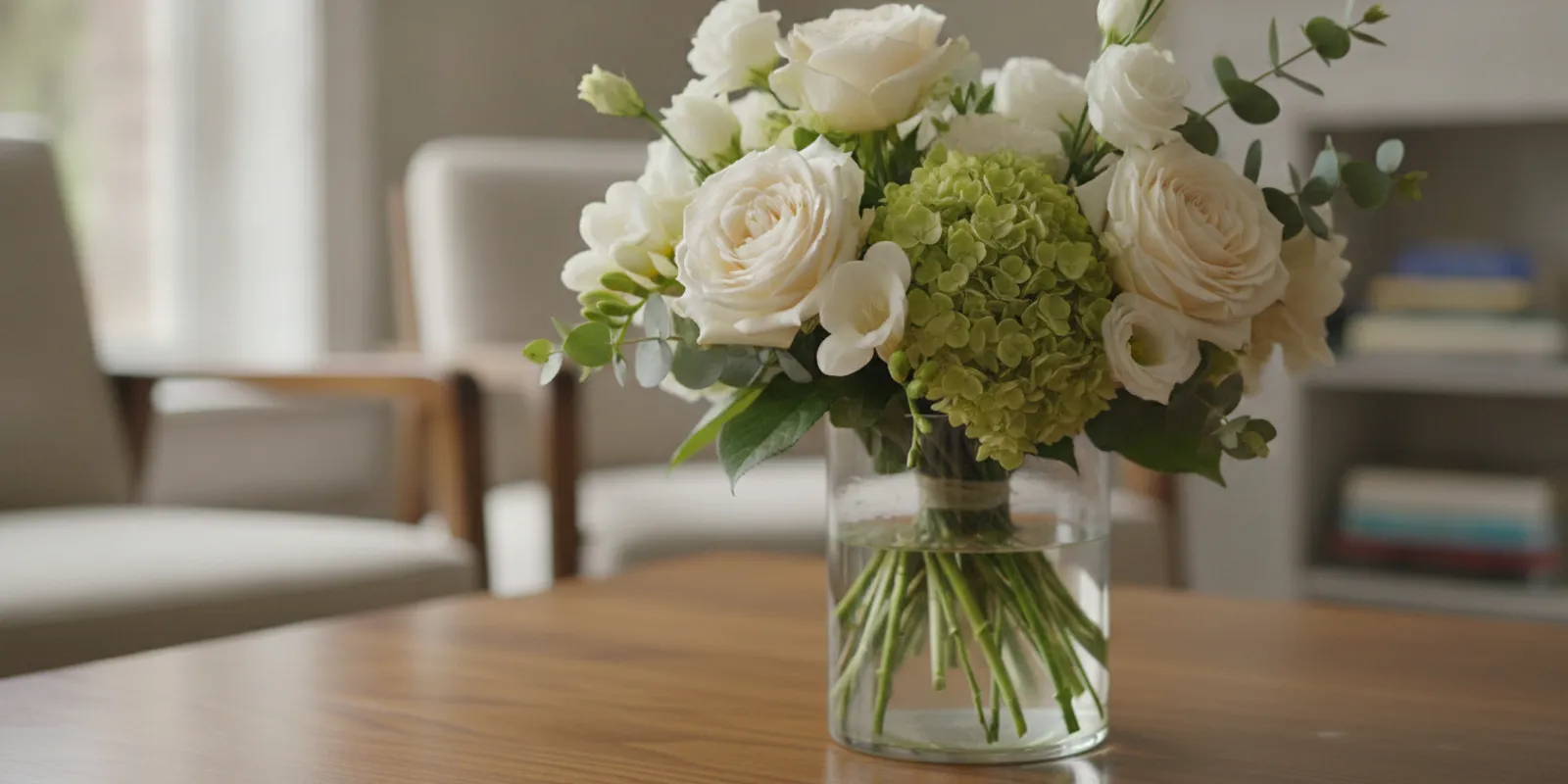
Choosing allergy friendly flowers starts with one important distinction: no bouquet can be guaranteed allergy-proof for every person. Pollen, fragrance, plant sap, and even floral preservatives may affect people differently. If you are sending flowers to someone with sensitivities, the safest choice is to ask what they tolerate, then request a low-fragrance design with blooms selected around their specific concerns.
Call to discuss a flower order
What does “allergy friendly” mean when choosing flowers?
People often use “allergy” as a general term for any unpleasant reaction around flowers. The cause can vary. One person may react to airborne pollen. Another may be bothered by a strong floral scent, have asthma symptoms around fragrance, or develop skin irritation after touching a particular plant. Those are different sensitivities, and they do not all call for the same bouquet.
For example, a recipient who mainly avoids fragrance may be comfortable with a lightly scented arrangement, while someone with a known pollen allergy may need a different selection and careful handling. Someone with contact dermatitis may need to avoid particular leaves, stems, or sap even if the flowers have little scent. A person with a severe allergy or asthma may decide that flowers are not appropriate at all.
So treat “allergy friendly” as a request for thoughtful selection, not a medical promise. A florist can help discuss flower types and design options, but cannot determine a recipient’s diagnosis or guarantee that an arrangement will not cause a reaction. If you know the person’s triggers, share them accurately. If you do not, ask the person or someone close to them before ordering, especially when the sensitivity is serious.
For a gift, the goal is not to find a universal “safe flower.” It is to respect what the recipient has said, reduce likely exposure where possible, and give them control over whether and where the flowers are displayed. A simple note that the arrangement is optional can be considerate when you are uncertain.
Which flower-related triggers should you consider?
Before choosing stems, identify what the recipient means by sensitivity. If you can, ask a direct and low-pressure question: “Would flowers be welcome, and are there any scents or types you prefer I avoid?” That gives the recipient room to say no or offer useful details without having to explain their medical history.
- Pollen: Some flowers have visible pollen-bearing parts. Pollen can also transfer from a bloom to hands, clothing, a table, or nearby surfaces during arranging and care.
- Fragrance: A strong scent may be unpleasant or trigger symptoms for some people, even when pollen is not the concern. Fragrance sensitivity and pollen allergy are not the same thing.
- Plant contact: Some people experience skin irritation from handling certain stems, foliage, sap, or plant material. Avoid asking a sensitive recipient to trim or arrange flowers themselves.
- Other bouquet materials: Floral foam, wrapping, ribbons, preserved foliage, scented products, and vase additives may matter to some individuals. Ask about a specific known trigger rather than assuming the flowers are the only concern.
- Airway or respiratory concerns: If a person has asthma or a history of severe reactions, even a low-scent design may not be suitable. Follow their guidance and any advice they have received from a health professional.
Do not try to diagnose the reaction by testing flowers on the person. A gift should not become an experiment. If the person has a clear avoidance plan, follow it. If the trigger is unknown and the potential reaction is serious, choose a non-floral gift instead or ask before sending anything botanical.
Which flowers are often considered for a lower-pollen arrangement?
Buyers commonly ask about roses, orchids, tulips, carnations, and hydrangeas when looking for an arrangement that may be easier to manage. Some of these flowers have less exposed or less conspicuous pollen than blooms with prominent pollen-bearing centers. That can make them worth discussing with a florist, but it does not make any of them universally safe. Varieties differ, blossoms mature, and individual reactions vary.
Roses can be a classic choice for a polished, expressive gift. Orchids offer a sculptural look and often have little noticeable fragrance, although individual types and recipients differ. Tulips can create a clean, seasonal arrangement. Carnations and hydrangeas can add fullness and color. These are starting points for a conversation rather than a definitive safe list.
Ask for the specific design to be kept simple and low in fragrance, and tell the florist which blooms or plant families the recipient already avoids. If pollen is the concern, ask whether the proposed flowers have exposed pollen and whether the arrangement can be handled to minimize transfer. Do not assume a florist can remove all pollen or that removing a visible part eliminates the possibility of a reaction.
A recipient who already knows that a particular flower is troublesome should not be sent that flower just because it appears on a general list of low-pollen suggestions. Likewise, “pollen-free” claims should be treated cautiously unless the exact variety and the recipient’s needs are known. There is no universal list that replaces the recipient’s own experience and medical advice.
Williams Flower & Gift offers a broad selection of flowers, plants, and gifts, and its team can hear the buyer’s preferences before an order is selected. The bouquet collection is a place to explore arrangements, but check the individual design and ask about substitutions or specific flowers rather than assuming every pictured stem is suitable.
Which flowers or design features may be harder for some people?
Some arrangements have prominent pollen or a noticeable scent. Lilies, for example, can have visible pollen-bearing anthers and a distinct fragrance. Strongly scented flowers may not suit someone sensitive to perfume-like aromas. Large mixed arrangements can also make it harder to identify which particular bloom is causing discomfort if a recipient has several known triggers.
These examples are not a declaration that a flower will cause a reaction, nor that every other flower will not. A person may tolerate a flower that another person avoids. What matters is the specific recipient’s history. If they have named lilies, particular daisies, chrysanthemums, or another variety as a trigger, leave those out. If they have not named a type but fragrance is an issue, explicitly request a low-scent design rather than selecting by color alone.
Consider the amount of foliage and the way a bouquet will be handled as well. A recipient with skin sensitivity may prefer a design that arrives ready to display, without needing to strip leaves, cut stems, or remove pollen. Someone who is sensitive to scent may be more comfortable with a smaller, simpler arrangement than with a dense grouping of many fragrant varieties.
If a florist suggests a substitution because a requested flower is unavailable, ask what the replacement is before confirming. A substitute may change fragrance, pollen exposure, or the recipient’s known risk. For a sensitivity-related order, preserving the color palette is less important than preserving the stated avoid list.
When a person has severe allergies, a history of anaphylaxis, significant asthma, or a clinician-provided avoidance plan, do not rely on a general florist recommendation. Ask the recipient what is appropriate or choose a non-floral gift. It is entirely reasonable for someone to decline fresh flowers.
How can you ask the recipient what they can tolerate?
A short question often prevents more trouble than an elaborate guess. The person does not need to disclose private medical details. You only need enough information to know whether flowers are welcome and what to avoid. Try: “I’d love to send you something. Are fresh flowers okay for you, and are there any scents or blooms I should steer clear of?”
If the gift is a surprise, ask a partner, family member, caregiver, or office contact only when that person is likely to know the recipient’s preferences and it is appropriate to ask. Avoid putting the recipient in a position where they must accept a bouquet to be polite. You could offer the choice of flowers, a plant, or a non-floral gift instead.
Useful details include whether the person avoids all fresh flowers or only certain types; whether fragrance, pollen, touch, or another component is the concern; whether they prefer flowers kept outside a bedroom or away from a shared workspace; and whether they have a health plan that rules out floral gifts altogether. Keep the questions practical and do not press for a diagnosis.
If you are ordering for a hospital, care facility, workplace, or shared home, consider the people and policies in that setting too. A floral gift intended for one person may be placed in a common area or handled by staff. Confirm that flowers are allowed and that the recipient can keep them in a suitable location. For hospital-specific delivery details, see the hospital flower delivery information and check directly with the facility about its current rules.
When you cannot confirm the person’s preference, do not make the recipient responsible for managing a surprise that may affect their health. A thoughtful message asking first is still thoughtful. If you need to act without an answer, choose a non-floral option that does not contain a known trigger and let the person decide whether they want flowers later.
What should you tell a florist before placing an order?
Give the florist the practical details in clear language. “Allergy friendly” alone can mean different things, so describe what you know. For example: “Please avoid lilies and strongly scented flowers; the recipient prefers a simple arrangement with no known trigger blooms.” Or: “The recipient has a pollen sensitivity. Please discuss options before substituting flowers.” If you do not know the trigger, say so instead of asking for a guarantee.
It can help to provide the recipient’s preferred colors, occasion, delivery location, and whether a small design is preferable. If there is a specific flower they tolerate, name it as a preference, not as proof that every variety is safe. Mention whether the recipient should not handle stems or foliage, and ask if the arrangement can arrive ready to place in a vase.
Before the order is finalized, ask questions such as:
- Can the arrangement be designed with little or no noticeable fragrance?
- Which specific flowers are planned, and can you avoid the recipient’s named triggers?
- If a flower is unavailable, will you confirm a replacement before making the change?
- Can the design avoid exposed pollen-bearing flowers where possible, without promising that it is pollen-free?
- Can it be prepared so the recipient does not need to trim or handle the stems?
- What is included in the packaging or care materials, and can any known irritants be left out?
These questions help set a workable expectation. A florist may be able to recommend a design direction, but selection depends on the recipient’s known sensitivities and the flowers available for the order. If the florist cannot confirm an essential restriction, choose another gift rather than treating uncertainty as a guarantee.
Williams Flower & Gift is a third-generation family florist with more than 40 years of floral experience, serving the greater Salt Lake City, Portland, and Seattle-Tacoma areas. The company sources flowers directly from domestic and international farms and offers custom design. That experience can support a useful conversation about the order, but it does not replace a recipient’s medical guidance or ensure that a particular arrangement is safe for every individual.
How can you reduce exposure after the flowers arrive?
Even a carefully selected bouquet may not be right for every person. Give the recipient control over where it goes and whether it stays. If the person has requested no flowers, do not send them. If they have said a low-fragrance arrangement is acceptable, include a brief note about what you asked for and avoid implying that the bouquet is risk-free.
Where the recipient has approved flowers, a few practical choices may help limit contact with a possible trigger:
- Place the arrangement in a room the recipient chooses, rather than setting it beside their bed, desk, or usual chair without asking.
- Keep it away from food preparation areas, pets, and any place the recipient has identified as sensitive.
- Ask another person to unpack, trim, or arrange stems if the recipient avoids skin contact.
- Use a clean vase and follow the recipient’s preferences about plant food or other care products.
- Wash hands after handling flowers and avoid brushing pollen or plant material onto clothing or shared surfaces.
- Remove the arrangement if the recipient reports symptoms or changes their mind.
Do not place flowers in a location that conflicts with a care plan or facility rule. Do not attempt to manage a significant reaction by moving the bouquet alone; follow the recipient’s instructions and seek appropriate medical help if needed. These steps are ordinary courtesy and handling practices, not treatment or prevention advice.
Some people simply prefer to keep flowers outdoors, in a foyer, or in a room that is not used for sleeping. Others may be comfortable displaying them only briefly. A gift can still be meaningful if the recipient chooses to pass it along, share it, or remove it. Let them make that choice without pressure.
What if flowers are not the right gift?
When the recipient cannot confirm what is safe, or has asked to avoid flowers, choose a gift that respects that boundary. Depending on what the person enjoys and tolerates, that might be a card, a meal, a book, a locally appropriate gift, or a non-floral arrangement. Avoid scented candles, bath products, and other fragranced gifts if fragrance is the concern; a replacement gift should not simply recreate the same problem in a different form.
A plant is not automatically a safer alternative. Plants may flower, release pollen, have scent, or require handling. Soil and plant-care materials can also matter to some people. Ask first before substituting a potted plant for cut flowers. Similarly, dried or preserved flowers can contain plant material, dust, or treatments that are not suitable for everyone. “Not fresh” does not necessarily mean “allergy friendly.”
If the recipient has said that some flowers are acceptable but is cautious about a large bouquet, a small arrangement or a single approved stem may feel more manageable. The recipient can decide whether to keep it. But do not use a small size as a way to ignore a stated allergy or avoidance request. For a serious sensitivity, no flowers may be the most considerate choice.
Williams Flower & Gift offers flowers, plants, and gifts, and has a selection of options for different occasions. A broad catalog can make it easier to consider alternatives, but the right choice depends on the recipient, not on the category label. If the uncertainty is medical rather than aesthetic, ask the person or their health professional rather than trying to resolve it through product browsing.
How do you balance the occasion with a sensitivity?
A gift should communicate care without creating an obligation. For birthdays and anniversaries, you can ask what colors or styles the person likes while also confirming whether flowers are welcome. A restrained bouquet can feel polished and celebratory without relying on a dense mixture of highly fragrant varieties. For congratulations or thanks, a note may carry the sentiment even if the recipient declines fresh blooms.
For a get-well gift, the recipient’s comfort matters more than tradition. A person resting at home may not want a fragrant arrangement near their bed. Someone in a care setting may have restrictions on flowers, plants, or shared-room items. Confirm rules and preferences before sending. Williams Flower & Gift has information for get-well gifts, but a category page cannot confirm what a specific recipient or facility can accept.
For sympathy, a family may have cultural, religious, or personal preferences about flowers. If you know there are allergies in the household or at the service, ask the family or funeral home before sending. A respectful message, donation, or other requested gesture may be more appropriate than flowers. If flowers are welcome, share any restrictions with the florist and confirm where the arrangement should be delivered.
When the recipient is far away, do not assume that a delivery city or facility has the same rules as another location. Confirm the exact address and any delivery instructions with the person coordinating the gift. Williams Flower & Gift serves the greater Salt Lake City, Portland, and Seattle-Tacoma areas, but delivery availability depends on the destination and order details. A florist can help confirm whether an address is covered before you place the order.
The same principle works for any occasion: lead with the person’s preference, then choose a design that fits the moment. Flowers are one way to express affection, gratitude, or support, not the only way. The most thoughtful choice is one the recipient can welcome comfortably.
What should you check before confirming a flower order?
Use this brief checklist before you order. It helps separate what you know from what you are assuming and gives the florist the information needed to discuss options.
- Confirm flowers are welcome. Ask the recipient or someone who knows their preferences, especially if the sensitivity is serious.
- Name the concern. Share whether the issue is a specific flower, pollen, fragrance, skin contact, or another known component. If unknown, say that the trigger is unknown.
- Give a clear avoid list. Include any named blooms, scents, or materials and ask that they not be used.
- Ask about substitutions. Find out whether the florist will check with you before replacing a requested flower.
- Consider where it will go. Confirm that the home, workplace, hospital, or event allows flowers and that the recipient has a suitable place for them.
- Choose a backup. Have a non-floral option ready if a suitable design cannot be confirmed.
- Keep the message honest. Say what you requested, not that the arrangement is medically safe or guaranteed allergy-proof.
Delivery timing is a separate question from flower sensitivity. If you are ordering for delivery in Utah, same-day delivery may be available for orders placed before 1:00 PM where service coverage and availability allow. Confirm the address, timing, and current options when ordering; do not assume a deadline guarantees delivery for every location or design. Delivery fees vary by location and order size and are calculated at checkout.
You can review the company’s frequently asked questions for general ordering information. For destination-specific details, use the relevant local page, such as the information for flower delivery in Sandy. A local page can help with service context, but the recipient’s particular allergy needs still require a direct conversation.
How can you make a clear order request?
A well-worded request is specific without overstating what a florist can promise. Keep it short and put the restriction near the start of the conversation, before discussing colors or style. For example: “I am ordering for someone who avoids strong fragrance and lilies. Could you suggest a simple arrangement without those, and let me know before substituting anything?” This gives the florist an actionable request and makes the substitution question explicit.
If pollen is the concern, try: “The recipient has told me they are sensitive to pollen. Can you explain which flowers you can offer with less exposed pollen? I understand you cannot guarantee the arrangement is allergy-proof.” If you do not know the trigger, say: “I am not sure what causes the sensitivity, so please do not promise a safe design. Can you help me decide whether a simple arrangement is appropriate, or should I choose a non-floral gift?”
For an approved order, record the recipient’s avoid list and the florist’s response. Check the order confirmation and delivery details for accuracy. If the order is for an office, hospital, or shared residence, include the right recipient and location information so the gift does not end up in an unsuitable place.
It may also help to add a modest note for the recipient: “I asked for a low-fragrance design and avoided the flowers you mentioned, but please feel free to move or remove it if it is not comfortable.” That gives them permission to prioritize their wellbeing. Avoid writing “allergy-safe” or “pollen-free” unless the recipient has specifically approved that description and it can be substantiated for the exact arrangement.
If you would like help discussing an order, you can learn about Williams Flower & Gift or call the shop. The business is a family florist with more than 40 years of experience, but sensitivity questions still depend on the individual’s needs and the flowers selected. Ask for confirmation, and choose another gift if an essential restriction cannot be accommodated.
Call Williams Flower & Gift about your order
How do you choose an arrangement style without adding uncertainty?
Once the recipient has confirmed that flowers are welcome, keep the design brief focused on their comfort before you decide on a particular look. A compact arrangement with a limited number of flower types can be easier to discuss than a highly varied bouquet. Fewer varieties do not eliminate risk, but they make the requested ingredients clearer and may simplify a substitution conversation. Choose this approach only after sharing the recipient’s restrictions with the florist.
Think about where the flowers will be displayed. A large arrangement may make a strong visual statement, but a smaller design may be easier for the recipient to move or remove. If the person shares a home or office, ask whether the other occupants have sensitivities too. The person receiving the gift may be comfortable with flowers in one room but not in a common area used by family, colleagues, or visitors.
Color can help express the occasion without dictating a particular flower. You might request soft neutrals, warm colors, or a favorite shade and then let the florist discuss suitable stems that fit the known restrictions. But be clear that color preference is secondary to avoiding a named trigger. Do not ask for a specific flower because it matches a palette if the recipient has already said that flower is a problem.
Also consider the vase and arrangement form. A ready-to-display design may reduce the need for the recipient to handle stems, although someone else may still need to unpack it. A hand-tied bouquet might require trimming and arranging before it can be displayed. Neither style is inherently better for every sensitivity. Tell the florist whether the recipient prefers not to touch the flowers, and ask what will be required when the gift arrives.
If the recipient has only shared that fragrance is a concern, ask for a low-fragrance design and avoid adding scented extras. If pollen is the concern, ask about the proposed flowers and exposed pollen. If contact is the concern, ask whether the person can avoid handling stems and foliage. This separation keeps the request specific and prevents a vague “allergy friendly” label from being mistaken for an assurance.
Substitutions deserve special attention because fresh flowers and designs can vary. If the order depends on avoiding a particular bloom or scent, request confirmation before any change. A substitute that seems visually similar may have a different scent or pollen profile. If you cannot be reached or the florist cannot accommodate the restriction, agree in advance whether the order should be changed, delayed, or replaced with a different gift.
Finally, keep the recipient’s choice central after delivery. They may decide the bouquet is fine, prefer it in another room, or not want to keep it. Do not take offense if they move it or pass it on. The purpose of checking in is to offer a welcome gesture, not to require the person to accept or display something that makes them uncomfortable.
How should you plan for shared homes, workplaces, and events?
A bouquet is not always kept in a private room. It may arrive at a reception desk, be placed in a shared living space, or be displayed at a gathering. That means the recipient may not be the only person affected by its scent or plant material. Before ordering for a group setting, ask the person coordinating the space whether flowers are welcome and whether there are restrictions. Do not assume that a recipient can freely move an arrangement once it has been delivered.
For a home with several people, the recipient’s preference is still the most important guide, but shared sensitivities are worth considering. If you know that a family member or roommate avoids fragrance or certain flowers, choose a different gift or ask what would work in that household. The person receiving the flowers may not want to be responsible for explaining a reaction to guests or moving a large vase in the middle of a celebration.
At work, an arrangement may sit near colleagues who did not choose to receive it. Ask the recipient privately whether flowers are welcome at the office and whether there is a suitable place for them. A discreet note or a small approved gift might be a better fit than a prominent arrangement in a shared room. If the recipient works in a setting with patient, client, or public areas, check applicable workplace policies before sending anything botanical.
Events create additional questions. A table arrangement may be close to food, seating, or a speaker for hours, and venue staff may move it during setup. If the recipient has a known sensitivity, coordinate with the event host and florist about the placement and flower choices. Do not describe a centerpiece as safe for all guests. People can have different triggers, so an event organizer should make practical decisions based on the information available and the venue’s rules.
For a delivery to a hospital, care home, or funeral service, confirm both the destination’s current acceptance rules and the recipient’s own preferences. Policies can differ between facilities and may change. Even when flowers are allowed at the entrance, a patient’s room or shared ward may have separate restrictions. Ask before ordering and provide the exact delivery instructions. The hospital delivery information linked above is a starting point for service details, not a substitute for facility approval.
Time matters as well. If flowers are being delivered for a gathering, ask who will receive them and where they should be placed. If they arrive when the recipient is away, someone else may unpack them or put them in a common area. A planned handoff can avoid that uncertainty. When you cannot coordinate the timing or confirm the setting, send a card or ask the recipient to choose flowers at a later date.
These extra checks may seem small, but they help a gift reach the intended person in a way that respects everyone sharing the space. The right question is not only “Which flowers should I order?” It is also “Will this be welcome where it is going, and can the recipient decide what happens next?”
Frequently asked questions
Are roses allergy friendly?
Some people with sensitivities choose roses because many varieties have less prominent exposed pollen than certain other blooms. But roses are not allergy-proof. Fragrance, variety, pollen transfer, and personal triggers differ. Ask the recipient what they tolerate and tell the florist about any specific restrictions before ordering.
Are lilies a good choice for someone with allergies?
That depends on the person. Some lilies have visible pollen-bearing anthers and can have a noticeable scent, so they may not suit someone who avoids pollen or fragrance. If lilies are on the recipient’s avoid list, do not include them. If you are unsure, ask rather than assuming a lily is appropriate.
Can a florist guarantee an allergy-proof bouquet?
No general flower selection can be guaranteed safe for everyone. A florist can discuss flowers, fragrance, and substitutions, and may be able to follow a clear avoid list. That is not the same as a medical guarantee. For severe allergies, asthma, or a clinician’s avoidance instructions, follow the recipient’s plan and consider a non-floral gift.
Is a potted plant safer than cut flowers?
Not automatically. A plant may flower, have fragrance or pollen, or require handling. Soil and care products can also matter to some people. Ask the recipient whether plants are welcome and what types they avoid. A non-floral gift may be the better choice when you cannot confirm.
What should I do if the recipient has a reaction?
Follow the recipient’s instructions and any emergency plan they have. Remove the flowers from the area if they ask, and seek appropriate medical help for concerning symptoms. Do not try to diagnose the cause or treat a serious reaction yourself. When in doubt about whether to send flowers in the first place, ask before ordering.
A thoughtful choice begins with the recipient
Allergy friendly flowers are not a single flower type or a universal guarantee. They are the result of listening to the recipient, sharing clear restrictions with a florist, avoiding unsupported promises, and being willing to choose something else when flowers are not suitable. With that approach, you can make a gift feel personal while respecting the person who will receive it.

