
How Long Do Cut Flowers Last? A Lifespan Guide by Flower Type
Learn how long common cut flowers last, what affects vase life, and practical steps to care for an arrangement from delivery through its final days.
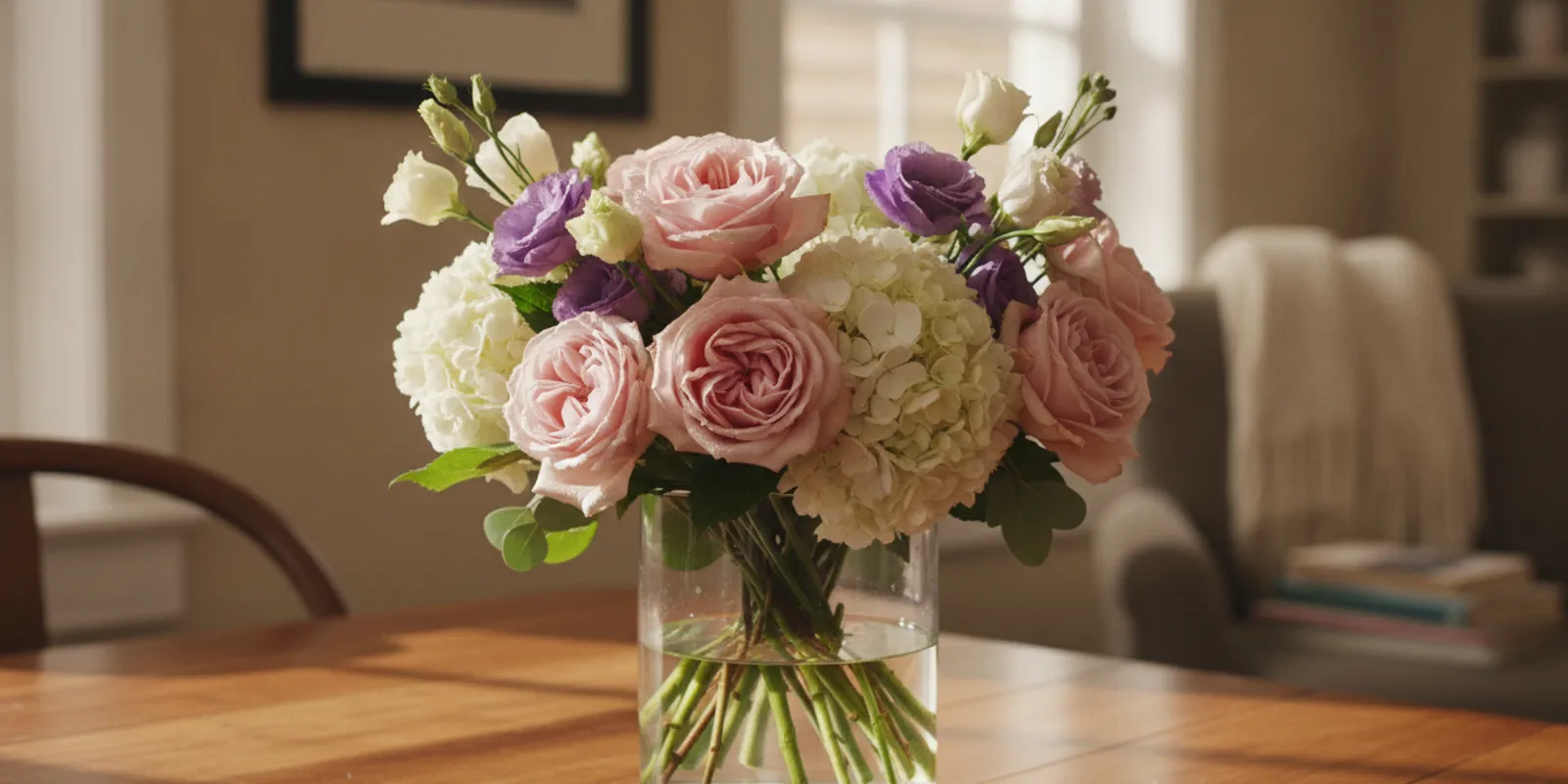
How long do cut flowers last? It depends on the flower variety, how mature and hydrated the stems are when they arrive, and how they are cared for at home. Many familiar varieties can look good for about a week, while some last longer and others have a shorter display life. A clean vase, fresh water, gentle handling, and a suitable location all help you make the most of an arrangement.
How long do cut flowers last by type?
Vase life is an estimate, not a fixed promise. A stem's variety, freshness, maturity at cutting, travel conditions, room temperature, and care all affect how long it remains attractive. The ranges below are practical planning guides for well-cared-for flowers. One bouquet can include blooms that fade at different times, and an individual stem may fall outside its typical range.
| Flower type | Typical vase-life range | Care point to remember |
|---|---|---|
| Alstroemeria | About 1–2 weeks | Remove fading blooms and keep leaves out of the water. |
| Carnations | About 1–2 weeks | Refresh water and trim stems as needed. |
| Chrysanthemums | About 1–2 weeks | Use a clean vase and remove submerged foliage. |
| Roses | About 5–10 days | Give stems a fresh cut and steady access to water. |
| Lilies | About 1–2 weeks | Remove spent blooms as they finish opening. |
| Tulips | About 5–10 days | Keep stems upright in fresh water; they continue growing after cutting. |
| Gerbera daisies | About 5–10 days | Use a thoroughly clean vase and avoid overly deep water. |
| Sunflowers | About 6–12 days | Give the stems room and replace cloudy water. |
| Peonies | About 5–10 days | Choose a bud stage that fits when you want the flowers to open. |
These ranges are best used to compare possibilities, not to set an exact countdown. A mixed bouquet does not automatically last as long as its most durable stem. The first flower to fade may be a variety with a shorter natural display life, or simply one that was more open when arranged. The rest may still be fresh and worth enjoying.
There is also a difference between looking fresh and remaining unchanged. Flowers continue to open, shift in shape, and sometimes bend toward the light. A tulip may lengthen; a lily bud may open after arrival; a rose may unfold over several days. Those changes are part of the display, not necessarily signs that the arrangement is failing. Look at petal condition, stem firmness, water clarity, and overall appearance together.
What affects how long flowers stay fresh?
How mature is each bloom?
A tight bud and a fully open flower offer different experiences. The bud may need time to open, so it can provide a gradual change in the room. A bloom that is already open gives immediate color, but it has moved further through its natural life cycle. Neither stage is always better. If flowers are meant to look full on the day of a dinner or celebration, the immediate appearance may matter more than the number of days until the last petal changes.
Mixed arrangements often use several maturity stages on purpose. Some flowers may be open when the bouquet arrives, while others are still developing. That makes the composition feel different over time. When evaluating an arrangement, consider whether its stages suit the moment: a gift delivered a few days before an event may benefit from some closed buds, while a same-day centerpiece may need more open flowers from the start.
How fresh and hydrated were the stems?
Cut flowers are living plant material. Once cut, their stems still need to take up water to support leaves and blooms. Time spent out of water, warm transport, or rough handling can leave them stressed before they reach a vase. After receiving flowers, get them into clean water as soon as reasonably possible. If the stems have been dry or the ends look damaged, a fresh trim can expose tissue that is better able to draw up water.
Freshness is not always visible from one detail alone. A firm stem and clean-looking petals are useful signs, but flowers naturally vary in shape and maturity. With a gift, the recipient may not know how long the bouquet was in transit. Focus on the care you can control after delivery rather than trying to infer an exact number of days from appearance.
Why do water and vase cleanliness matter?
Leaves left below the waterline can decay, and residue inside a vase can make the water less appealing to the stems. Start with a clean container, remove leaves that would sit underwater, and replace water if it becomes low, cloudy, or dirty. A vase that is too narrow can crush stems together; one that is too wide may fail to support them. Choose a vessel that keeps the arrangement upright without squeezing it.
Use the flower food supplied with the bouquet according to its directions. Different packets may be intended for particular amounts of water, so do not assume that more is better. Avoid adding household products at random. If you do not have flower food, clean water and a clean vase are the sensible basics. Care instructions included with a particular arrangement should take priority over a general rule.
What does the room do to the arrangement?
Heat can encourage flowers to lose water more quickly. A vase beside a sunny window, radiator, fireplace, or hot appliance may experience a warmer environment than one on a shaded table. Strong drafts can also dry petals and leaves. Choose a stable spot away from direct sunlight, heating vents, and exterior doors that open frequently.
Ripening fruit releases ethylene, a gas that can affect some flowers. It is a practical precaution to keep a bouquet away from a fruit bowl, especially when fruit is actively ripening. Avoid smoke and other sources of heat as well. The aim is not to make a home into a storage room; it is to avoid obvious conditions that can shorten the display.
How can handling and timing make a difference?
Every transfer—from florist to vehicle, doorstep, and home—can expose flowers to changes in temperature or movement. If a recipient is not home, the bouquet may remain outdoors longer than intended. When sending flowers, consider whether someone can bring them inside and place them in water promptly. For a gathering, plan where the arrangement will sit before guests arrive, rather than leaving it beside a sunny window or a warm serving area.
Delivery timing depends on destination, coverage, and availability. Williams Flower & Gift is a third-generation family florist with more than 40 years of floral experience, serving the greater Salt Lake City, Portland, and Seattle-Tacoma areas. For Utah orders placed before 1:00 PM, same-day delivery may be available where service coverage and availability allow. Check the destination and current ordering details when timing matters.
How can you care for a bouquet when it arrives?
A short setup routine gives flowers a strong start. Gather a clean vase, fresh water, and clean, sharp scissors or floral shears before opening the wrap. Work calmly and avoid leaving stems on a dry counter while you decide where everything goes.
- Wash and rinse the vase. Remove old water and residue, then rinse the vessel well. If the bouquet is large, make sure the vase can support its weight without crowding the stems.
- Prepare the water. Add fresh water at a moderate level. If flower food is included, follow the packet directions rather than estimating the amount.
- Unwrap and inspect. Look for any leaves that would sit below the waterline, bent stems, or blooms that have already finished. Handle flowers by the stems where possible instead of pressing on petals.
- Remove submerged foliage. Strip leaves from the portion of each stem that will be underwater. Do not remove healthy leaves unnecessarily; they contribute to the arrangement's appearance.
- Trim the stem ends. Using clean, sharp tools, cut a small amount from each stem at an angle. A fresh cut is useful if the stems have been out of water or their ends look dry. Avoid crushing or splitting the stem.
- Arrange with space. Place stems so air and water can move around them. If a stem is too tall or short for the vase, adjust it gradually rather than making a large cut you cannot undo.
- Choose a suitable location. Set the vase in a cool, comfortable part of the room, away from direct sun, heat sources, strong drafts, and ripening fruit.
- Check water regularly. Look at the water each day. Top it up if it is low, and replace it if it looks cloudy or dirty. Rinse the vase when needed.
For a hand-tied bouquet, you do not have to take every stem apart if the arrangement is already balanced and easy to place in a vase. Keep the design intact where possible. If the stems are bound, follow any care instructions provided and avoid cutting through a binding that holds the shape. You can still remove leaves at the waterline and monitor the water.
If you receive a boxed arrangement with floral foam or a container designed for the flowers, do not automatically transfer it to a vase. Check its care card. Some designs are assembled to remain in their original container, and moving them may disrupt the support or water source. If the water level is visible and low, add water as directed for that design.
How often should you change the water and trim stems?
Check water every day, especially during the first few days. Flowers can drink more than expected, and a vase that looked full in the morning may be low later. Refill with fresh water when needed. If the water becomes cloudy, smells unpleasant, or contains fallen leaves, remove the flowers carefully, wash and rinse the vase, then refill it and return the stems.
There is no universal schedule that fits every bouquet and room. A small arrangement in a cool room may need less attention than a full vase in a warm space. Use visible conditions as your guide. Cloudiness, a low level, or decaying foliage is a reason to refresh sooner than a calendar reminder would suggest.
Recut stems when they appear unable to take up water, when the ends are soft or damaged, or when you are refreshing an arrangement that has been out of water. Remove only a modest amount, because repeated large trims make stems too short for the vase. Before cutting, consider whether the stem length helps the bouquet maintain its balance. A shorter vase can be a good solution if several stems have been trimmed over time.
When you change water, keep the flowers from resting on a dry surface for long. Set them in a clean temporary container or work efficiently. If a bouquet is tightly designed, you can refresh the water without fully dismantling it. Take out individual stems only when they need trimming or have started to fade.
What should you do when flowers begin to wilt?
Start with the simplest checks. Is the water low or cloudy? Are leaves submerged? Is the vase beside a heater or sunny window? Correct those conditions first. Replace dirty water, rinse the vessel if needed, remove submerged foliage, and move the arrangement to a more stable location.
Next, inspect the stems. If a stem looks dry or damaged at the end, trim a small amount with clean, sharp shears and return it to fresh water. A drooping flower may need a little more support, so place it among sturdier stems or use a narrower vase. Give it time to hydrate before deciding whether it is beyond recovery.
Separate the individual flowers from the overall bouquet in your assessment. One bloom may have browning petals while the rest remain fresh. Remove the spent flower and any leaves that have become limp or discolored. If several stems have declined, make a smaller arrangement from those still in good condition. A low glass or compact vase can make a handful of remaining blooms look deliberate rather than incomplete.
Not every droop signals the same problem. A flower may bend naturally as it opens, while a tulip can continue to grow and shift position. Signs that more strongly suggest decline include limp petals, browning edges, a soft or damaged stem, or water that remains unpleasant after the vase is cleaned. Normal changes in shape and opening are not, by themselves, reasons to discard an arrangement.
How should you choose flowers if vase life matters?
If you are selecting a bouquet for a longer display, ask about the flower types and choose varieties commonly associated with a longer vase life, such as carnations, chrysanthemums, and alstroemeria. Roses, lilies, tulips, sunflowers, peonies, and seasonal flowers can all be appealing choices too. The best fit depends on the look you want and the date when it will be enjoyed, not just the longest estimate in a table.
Consider the recipient's space and habits. A compact arrangement may work well on a desk or bedside table, where it is easy to check water. A larger design can make an impressive focal point but may need a more substantial vase and a convenient place to sit. A recipient who travels frequently may appreciate a gift timed for when they are home. Someone who enjoys arranging flowers may welcome a loose bouquet they can place in their own vessel.
Think about color and opening stages as well. A palette of mostly open blooms can make an immediate impression. A design with some buds may change over several days. If you are sending flowers ahead of a dinner or family gathering, ask for a style that suits the day they will be displayed, and allow time for the recipient to receive and care for them. If a particular flower or color is essential, confirm availability before ordering because seasonal selection can vary.
Williams Flower & Gift sources flowers directly from domestic and international farms and offers flowers, plants, and gifts. The company has more than 40 years of floral experience as a third-generation family florist; that heritage describes the established business, not decades of operation in Utah. Custom design can help when you have a specific palette, setting, or sentiment in mind. For general inspiration, browse the bouquet selection and compare designs with the space and occasion.
Should you choose cut flowers or a plant?
Cut flowers are ready to display and offer immediate color. They work well when you want a finished gift for a birthday, anniversary, congratulations, thank-you, or just-because moment. Their display is temporary, but that can be part of the pleasure: the recipient can enjoy a changing arrangement without taking on the longer care of a growing plant.
A plant may suit someone who wants an ongoing living addition and enjoys learning its care needs. Plants vary widely in light, water, and placement requirements, so the recipient's home and routine matter. If you do not know whether they have suitable light or time for a plant, a cut arrangement can be the simpler choice. Williams Flower & Gift offers flowers, plants, and gifts, giving buyers options when a vase bouquet is not the best match.
For either choice, the occasion and the person's preferences should lead. Ask whether they like strong fragrance, bright color, or a quieter palette. Consider pets, available space, and whether the gift will be carried or delivered. These practical details help you choose something that feels thoughtful instead of treating vase life as the only measure of quality.
How can you plan delivery around an event?
Work backward from when the flowers will be seen. For a dinner, decide whether you want the arrangement to arrive that morning or the day before, and make sure someone can bring it indoors. For a birthday or anniversary surprise, consider the recipient's schedule and whether a delivery can be received safely. If flowers are for a gathering, identify a display location before guests arrive so the vase does not end up beside heat or direct sun.
Plan the vessel as well as the flowers. A centerpiece should fit the table and leave useful room for conversation and serving dishes. A bouquet intended for an entryway needs a stable surface and enough clearance. A smaller arrangement can be more practical in a crowded room. If the flowers will be transported after delivery, choose a location where the vase can remain upright and avoid carrying it by the blooms.
Check delivery coverage for the exact destination rather than assuming every nearby address has the same options. Williams Flower & Gift serves the greater Salt Lake City, Portland, and Seattle-Tacoma areas. For Utah orders placed before 1:00 PM, same-day delivery qualifies where service coverage and availability allow. Delivery fees vary by location and order size and are calculated at checkout. Read the shop's frequently asked questions and local delivery information for general planning, then confirm the exact destination and timing while ordering.
When timing is especially important, leave a margin for the recipient to bring the flowers inside and arrange them. A delivery window and the moment the bouquet is placed in water are not necessarily the same. If you need confirmation about a destination or a particular flower, contact the shop before finalizing the plan.
Frequently asked questions
Do flowers last longer in cold water?
Clean water matters more than trying to achieve an exact temperature. Cool or room-temperature water is suitable for many arrangements. Avoid extremes and follow the care directions supplied for a particular design.
Should I put a bouquet in the refrigerator overnight?
A cool location can be helpful, but a household refrigerator may contain ripening fruit, lack space, or expose delicate flowers to cold air and temperature changes. A cool room away from direct heat is a simpler choice for most home arrangements.
How often should I change the water?
Check it daily and replace it when it becomes cloudy, low, or dirty. Rinse the vase and recut stems if needed. The right frequency depends on the arrangement and the conditions in the room.
Can I revive a drooping flower?
Sometimes. Clean the vase, replace the water, remove submerged leaves, and recut the stem. Move the flower away from heat and give it time to hydrate. A badly damaged bloom or one with browned petals may simply have reached the end of its display life.
Does a longer vase life always mean a better bouquet?
No. A bouquet should suit the occasion, the recipient, and the desired look. A seasonal flower that makes the right impression may be a better choice than a variety with a longer typical range. Consider appearance, meaning, and care together.
Choose flowers for your occasion
With fresh water, a clean vase, and a place away from heat and direct sun, you can give cut flowers a thoughtful start and enjoy their changing beauty as long as possible.

