
How to Choose a Wedding Florist: What to Ask and Look For
Choose a wedding florist in Salt Lake City with practical questions about design, proposals, budget, delivery, setup, and how to prepare for a consultation.
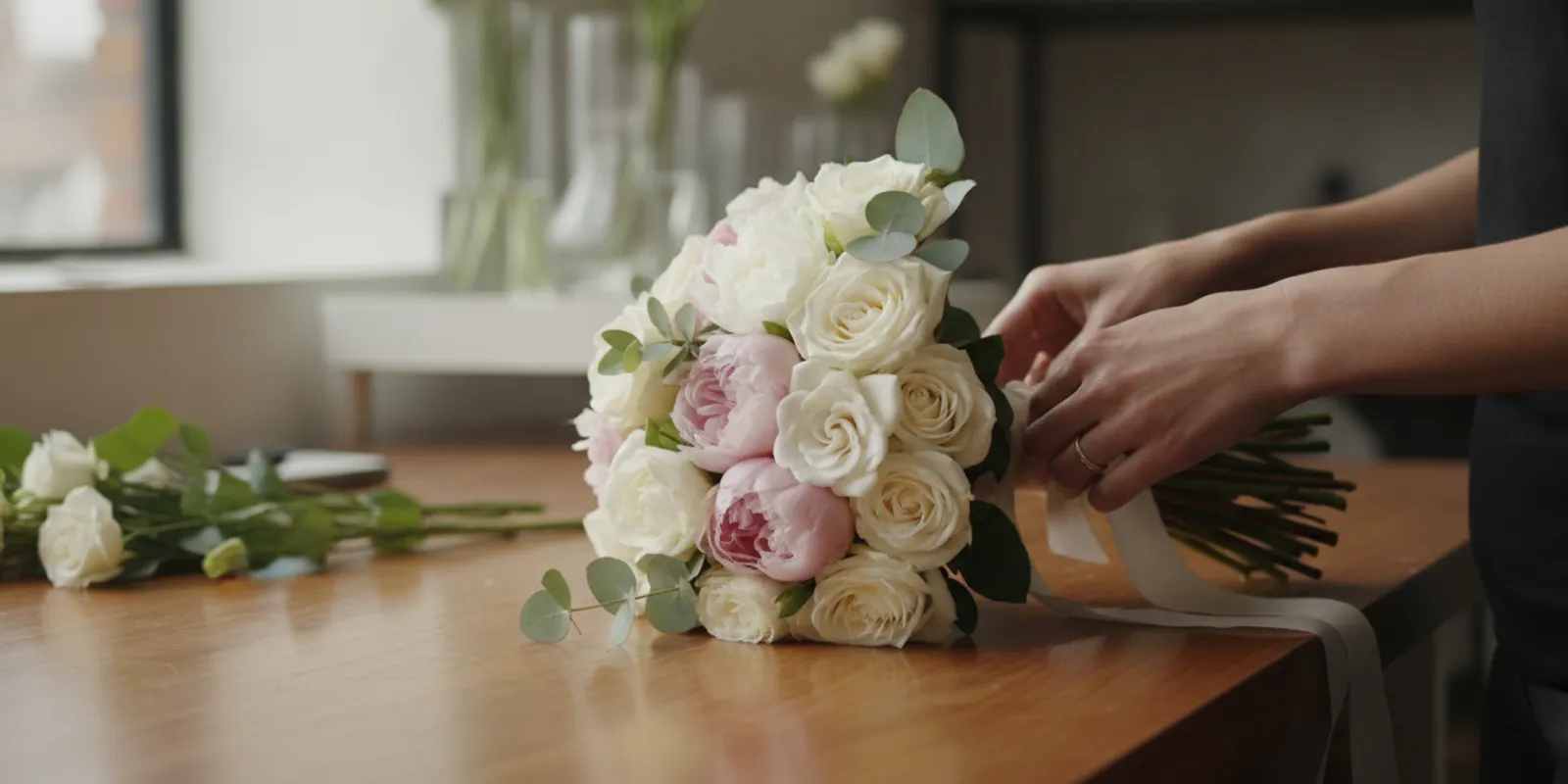
Choosing a wedding florist in Salt Lake City is about more than finding flowers you like. You are choosing a partner who can understand your priorities, work within your plans, and explain how the designs, delivery, and setup will come together. A thoughtful conversation early on can help you compare options without feeling rushed.
Call to discuss your wedding flowers
What should you decide before contacting a florist?
You do not need every detail finalized before reaching out. Start with the date, venue or venues, approximate guest count, and the parts of the day where flowers matter most. If you are still considering locations, share the options and when you expect to decide. Set an overall floral budget or comfortable range. Wedding and event florals are typically quoted in the $2,000–$5,000 range, depending on scope and design; that is a broad guide, not a quote. The number of arrangements, flower choices, installation needs, delivery, and setup all affect a proposal. Decide whether your budget includes bouquets, personal flowers, ceremony pieces, and reception arrangements.
Before contacting a florist, gather the date and timing, venue details and access instructions, guest-count range, a priority list, and a small selection of visual references. Mark which floral pieces matter most and which you could simplify. You do not need every decision finalized; useful early information helps the florist respond to your plans rather than guess.
If you are unsure what arrangements are needed, ask during a consultation. Williams Flower & Gift offers wedding consultations, custom arrangements, and event coordination. For an overview of local service, visit the Salt Lake City florist and delivery page.
How can you tell whether a florist understands your style?
Look for a florist who asks about the feeling you want the flowers to create, not just the names of particular blooms. Your answers may point toward a clean, structured look, a loose garden style, a restrained palette, or a colorful mix. Explain what matters most and what you would rather avoid. That gives the designer room to suggest options while keeping the result personal.
Use inspiration photos to communicate, not as a promise that every detail can be duplicated. Flowers are living materials, and availability varies by season and sourcing. Ask what features in an image can be carried into your design: shape, color, scale, texture, or a particular flower. A useful conversation translates the idea into workable choices instead of simply saying yes to an image.
Ask to see examples of designs relevant to your plans. If you want a compact bouquet, tall arrangements, or ceremony flowers that may be moved to the reception, discuss those forms directly. Ask how pieces relate to each other and what trade-offs different choices create. When reviewing a portfolio, focus on the florist's ability to work across different scales and settings. A single image may show a look you admire, but a conversation about your specific venue and priorities reveals how that look might be adapted.
Which questions help you assess availability and fit?
Availability is not just whether the florist is open on your date. Ask whether the team can take on the size and locations of your event, and whether the timeline works for consultation, design decisions, delivery, and setup. Be specific about the venue access window and any transition between ceremony and reception.
- Are you available for our wedding date and chosen locations?
- What information do you need to prepare a proposal?
- How do you handle substitutions if a requested flower is unavailable?
- Can you coordinate delivery and setup at more than one location?
- What decisions must be made by which dates?
- Who should we contact if the schedule or venue details change?
Ask for clear boundaries. If a flower, installation, or venue requirement cannot yet be confirmed, find out what information is needed and when it can be confirmed. This is more helpful than assuming a detail is settled when it still depends on availability or event logistics.
How should you compare wedding flower proposals?
Compare proposals on the same basis. One may include delivery and setup while another lists only floral pieces. Check descriptions, quantities, locations, and services before deciding that one is less expensive. Delivery fees vary by location and order size and are calculated at checkout for regular orders; ask how event delivery and logistics are reflected in a wedding proposal. Use a comparison sheet to spot differences without reducing the decision to the bottom line.
| What to compare | Questions to ask | Why it matters |
|---|---|---|
| Design scope | Which bouquets, personal flowers, ceremony pieces, and reception arrangements are included? | Matching lists prevent gaps. |
| Flower plan | Are specific flowers requested, or are color and style the priority? How are substitutions handled? | Clarifies flexibility if seasonal or supply conditions change. |
| Delivery and setup | Which locations, windows, setup tasks, and transfers are included? | Logistics shape the plan and proposal. |
| Pricing and terms | What is included in the quoted amount, and what could change it? | Shows whether numbers cover equivalent work. |
| Communication | Who is the contact, and when are decisions due? | Sets expectations for planning and changes. |
Do not compare a detailed custom proposal with a rough estimate as if they were the same. If a line is unclear, ask for an explanation or a revised version separating the major elements. Confirm essential assumptions in writing, including locations, timing, and the pieces that matter most.
What should you ask about budget and priorities?
Be candid about your spending limit and the emotional or visual priorities behind it. If a ceremony focal arrangement matters more than flowers at every table, say so. A designer can build around what you value and identify where a simpler choice may work. Describe the feeling and most important moments first, especially if you are open to alternatives.
When a proposal exceeds your comfort range, ask which adjustments would make the biggest difference. Discuss fewer pieces, different sizes, simpler installation, or a revised flower mix. Ask the florist to explain each change's effect before choosing. A lower figure is useful only if the revised plan still supports the experience you want.
Wedding and event pricing is typically quoted in the $2,000–$5,000 range, with the final proposal depending on the event and its requirements. Request a consultation to discuss your date, priorities, and locations rather than treating a general range as a guaranteed price.
How do season and flower choices affect the plan?
Talk about the time of year and how flexible you can be with particular flowers. If you have one must-have bloom, identify it early. If your priority is a color palette or silhouette, let the florist know alternatives may be acceptable. Direct sourcing from domestic and international farms supports a broad selection, but no specific flower should be treated as guaranteed until confirmed for your order.
Ask how the overall look can remain consistent if a stem needs to change. Similar color, scale, texture, or shape can preserve the design direction. Agreeing on a substitution approach in advance can prevent surprises close to the event. You can say, for example, that the palette and overall shape matter more than one named flower, or conversely that a particular flower is central and you want to discuss its availability early.
What delivery and setup details should you confirm?
Wedding flowers may need to reach different places at carefully planned times. Give the florist the full schedule, venue addresses, access instructions, and a reliable day-of contact when available. Ask who places arrangements, whether ceremony pieces can move to the reception, and how timing will be coordinated with the venue.
Confirm practical restrictions with the venue. Some spaces may have rules about candles, installations, attachment methods, or vendor entry times. Share those rules before design is finalized. If you have a second location or short transition between events, make that clear when requesting a proposal.
For regular Utah flower orders, same-day delivery is available only for orders placed before 1:00 PM and only where service coverage and availability allow. Wedding delivery and setup are event-specific, so discuss the schedule directly rather than assuming standard same-day service applies. Review the frequently asked questions or contact the shop to confirm details.
How can you make the consultation productive?
Bring your date, venue information, budget range, guest estimate, and concise visual references. Mark which elements are essential and which are inspiration. If a planner or venue coordinator manages logistics, note who will share updates and who can approve decisions.
During the conversation, listen for specific explanations. A helpful florist should be able to discuss design options, substitutions, logistics, and what remains unknown. Ask for clarification when a recommendation is unfamiliar. You are not expected to know flower names or event terms; describing the result you want is enough to start.
Afterward, write down next steps: what the florist will provide, what you need to send, when the proposal is expected, and when you need to decide. A clear follow-up plan makes it easier to compare options without losing track of details.
How can you turn a broad idea into a workable floral plan?
List each point where flowers will be seen or handled: the wedding party before the ceremony, the entrance, ceremony focal point, cocktail hour, reception tables, and a welcome or guest-book table. You do not need flowers everywhere. The list lets you choose where a floral detail adds meaning. Group the spaces by importance. A couple focused on ceremony photographs may prioritize a focal point and bouquets; another may care most about the reception atmosphere and table arrangements. A florist can then build a plan with a center of gravity instead of spreading the budget evenly across every surface.
Describe the result instead of prescribing every stem. “A low arrangement that frames the ceremony without blocking the view” gives useful direction on scale and function. “Something elegant” needs more detail: perhaps a restrained palette, a formal shape, a refined container, or a quieter effect. Separate fixed requirements from preferences. A fixed requirement might be that guests can see across the table or that the venue allows no wall attachments. A preferred bloom or palette may be more flexible. Protect the requirements while finding ways to retain the preferred look.
How do you use inspiration photos without overplanning?
Choose a small group of images that show different useful details rather than dozens of similar examples. One may show a color relationship, another a bouquet shape, and another the scale of a ceremony display. Label what you like in each so the florist does not assume every image is a complete blueprint.
Show one or two examples of what you do not want, with a short explanation: perhaps a design feels too dense, formal, bright, or tall. Pair that boundary with positive direction such as airiness, soft color, a natural outline, or a compact shape. Look for common threads across the references. If different flowers share a soft palette and relaxed shapes, those repeated qualities may matter more than a particular bloom.
Consider how photographs were made. A close-up may hide an arrangement's size, while a styled image may show a setting unlike your venue. Ask how scale, viewing distance, lighting, and the room itself might affect the result. Inspiration is useful when translated thoughtfully for the actual event.
What information makes a proposal more accurate?
If the guest count is changing, provide a range and say when you expect to confirm it. List both addresses if ceremony and reception are separate. Label access times as pending when they are not final. Clear uncertainty is easier to plan around than an assumption that later proves wrong.
Include the people who may need personal flowers, but do not guess at quantities if you are unsure what is customary. The florist can help you decide who needs a boutonniere, corsage, or another piece. State who is in the wedding party and whether family members have requested flowers. For reception flowers, share the table plan if available. The number and shape of tables and room layout affect design choices. Mention other items on tables, such as place settings, favors, or menus, so the florist can consider the whole surface.
Share venue rules about open flames, hanging objects, installation methods, loading access, cleanup, or vendor entry times. If you do not know the rules, ask the venue. When requesting an estimate, explain what you want the document to show. Separate line items for personal flowers, ceremony flowers, reception arrangements, delivery, setup, and transfers can make the plan easier to understand. Comparisons are fair only when proposals use similar quantities and responsibilities.
How can you make trade-offs without losing the overall look?
If the proposal is above your comfort range, ask which parts account for the largest design or logistical commitments and what choices could change them. Preserve the most visible focal point and simplify secondary areas if that reflects your priorities. A couple who values a ceremony backdrop might keep it as the main feature, choose smaller personal flowers, and use simpler reception pieces. Another may emphasize the reception because guests spend much of the day there.
Review scale and repetition. A few carefully placed arrangements may have more impact than many small pieces scattered through a room. Ask whether a design can be adapted to fewer locations or whether a ceremony arrangement can move to a reception focal area. Any transfer needs a realistic plan: someone must know what moves, when, and where. Confirm that timing and venue permissions allow it.
If palette and shape matter more than a named bloom, say substitutions are welcome when they support the design direction. If one flower is essential, identify it early and ask what happens if it cannot be obtained. When revising a proposal, request an updated version and check related counts, locations, setup, and delivery. Keep a record of the version you approved.
What should you confirm after choosing a florist?
Confirm the date and locations, design direction, included pieces, and assumptions about guest count or venue access. Ask who will be your point of contact and how changes should be sent. Find out which decisions have deadlines. Flower preferences, quantities, delivery windows, and final venue details may not all need to be settled at once. A simple timeline shows what is needed now and what can wait.
Before the wedding, provide a final schedule and a day-of contact who can answer practical questions. That person should know the delivery plan and be reachable during the relevant window. Confirm who is responsible for receiving, placing, or moving arrangements. If a venue or schedule changes, share that information promptly and ask whether the design or proposal needs revision.
A proposal describes an agreed plan, but flowers are seasonal and logistics depend on final event details. If a substitution or timing adjustment becomes necessary, ask what changes and what remains consistent. Distinguish confirmed details from requests that still need approval.
How can different couples prioritize their flowers?
Consider a couple planning a small ceremony followed by dinner at one venue. They may decide bouquets and a ceremony focal point carry the most meaning, while the dinner room already has strong visual character. Their conversation can focus on a few chosen pieces and whether any could serve another purpose later. The venue layout and time available for a move matter.
A larger reception where guests spend much of the evening at tables may call for more emphasis on table arrangements and a cohesive room-wide palette. Share the table count, layout, and any restrictions on height or open space. If conversation across tables is important, say so rather than assuming a particular arrangement size will achieve it.
A couple planning two locations with a short gap between ceremony and reception needs to discuss travel, access, and who will oversee any transfer. They might leave ceremony flowers in place and use distinct reception pieces, or discuss moving a suitable arrangement. The right choice depends on timing and venue permissions. A useful florist conversation covers what flowers need to do, where they need to be, what matters most, and which details remain flexible.
What should you ask about communication and changes?
Agree on who can approve the floral plan and relay information from a planner or venue. If several people send separate instructions, the florist may receive conflicting requests. Choose one primary contact and make sure decision-makers agree on that person's role.
Ask how a requested change will be documented. If you change a quantity, palette, location, or delivery time, request confirmation explaining the updated plan and any effect on the proposal. Keep the latest written plan where the people responsible for the event can find it. Clarify what should happen if an important detail changes close to the date. A venue change, schedule shift, or updated guest count may affect delivery and setup. Ask which updates need immediate notice and what information is useful, such as a revised address, access window, floor plan, or venue contact.
Ask what the florist needs from you at each stage. You may need to provide final counts, approve a design direction, or verify venue rules. Write tasks beside their due dates so you can see whether a decision remains outstanding.
How can you evaluate the conversation itself?
Pay attention to whether the florist listens and responds to your priorities. A productive consultation should leave you with a clearer understanding of options, not a feeling that you must choose every detail immediately. The florist should explain why a recommendation fits the venue or how a proposed change affects the design.
You do not need identical taste to work well together. The important question is whether the florist can understand the atmosphere you want and translate it into a plan you can discuss. Ask for examples or plain-language descriptions when terms are unfamiliar. Notice how uncertainty is handled. A clear answer may be that a flower, access time, or transfer depends on availability or the venue, followed by an explanation of when it can be settled.
After the consultation, summarize the design priorities, information still needed, next action, and expected timing. If anything differs from your notes, ask for clarification before deciding. A brief written recap can keep comparisons consistent when speaking with more than one florist.
When should you contact a florist?
Reach out once you have a wedding date or likely date and enough venue information to discuss the event. If you are still deciding, say so. Early contact gives you time to compare fit, understand what information is needed, and make decisions without compressing the process. If the date is approaching, contact the shop promptly and ask whether it can accommodate the request; do not assume availability.
Williams Flower & Gift is a third-generation family florist with more than 40 years of floral experience, serving the greater Salt Lake City area as well as Portland and Seattle-Tacoma. Its Utah market is newer, so company heritage should not be confused with decades of local operating history. Explore local flowers and delivery options at the Salt Lake City flower shop.
Ask about a wedding consultation
With a clear date, honest budget, and a short list of priorities, you can have a more useful conversation and choose a floral plan that feels right for your celebration.

